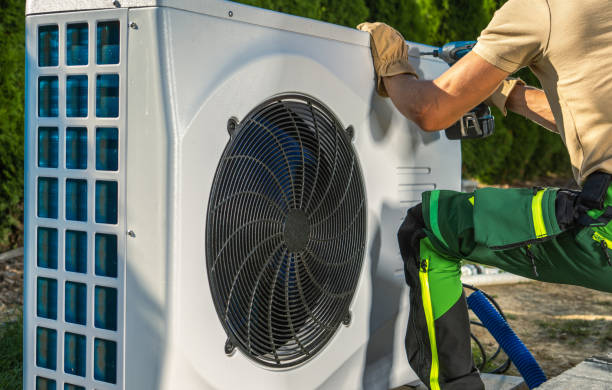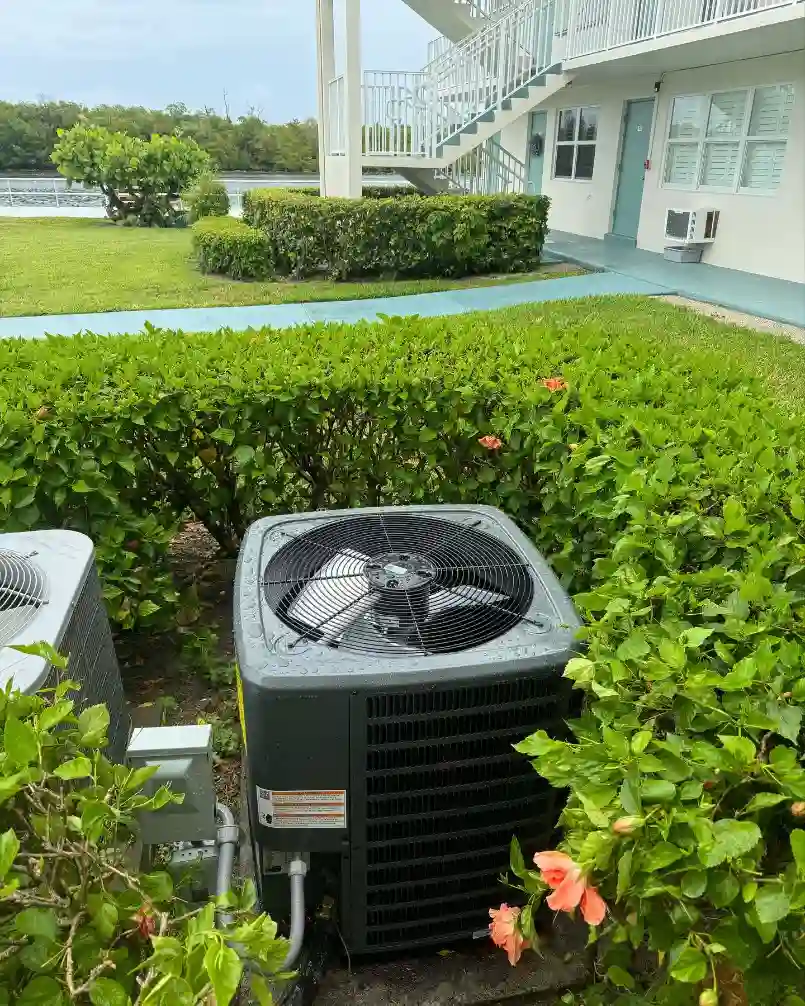
Replacing the AC in a condo or townhouse isn’t quite like replacing it in a single-family home. There’s an association to involve, the equipment may sit on a roof, a balcony or a shared mechanical area, and the air handler is often squeezed into a hall closet. With a little planning it goes smoothly. Without it, a two-day job can stretch into weeks.
Whether your system is failing now or you are planning ahead, this guide to condo AC replacement covers the timing, quotes, equipment choices and install-day details that the basics leave out.
Here’s what Boynton Beach and Palm Beach County condo owners should know before replacing their system.
Step 1: Check your association’s rules first
Most condo and HOA associations have rules about HVAC work. Before you schedule anything, ask your property manager or check your documents for:
- Approval forms. Many associations require an application before any equipment is replaced.
- Contractor requirements. Often a copy of the contractor’s state license and certificate of insurance, sometimes naming the association.
- Work hours and access. Permitted days and times, elevator reservations, loading areas and parking.
- Roof access. If the condenser is on the roof, the association usually controls the key and may require notice.
- Equipment placement. Rules on where condensers can sit and how line sets and drain lines can be run.
- Crane or lift requirements for some mid- and high-rise buildings.
Starting the paperwork early is the single best way to avoid delays, especially if your system is already failing in summer.
Step 2: Permits
In Florida, replacing an air conditioning system generally requires a mechanical permit from the local building department, pulled by a licensed contractor. Associations commonly ask to see it. A licensed contractor handles the permit and inspection as part of the job. Be wary of anyone who offers to skip the permit to save money; it can cause problems with insurance claims and when you sell.
Step 3: Understand your equipment
Closet air handlers
Many South Florida condos have a vertical air handler in a hall or utility closet. The new unit must physically fit the closet with room for service, the filter and the drain. Sometimes the closet opening, platform or return need small modifications.
Condensers on roofs, balconies or ground pads
Where your condenser sits affects labor and scheduling. Roof units may need a crane or lift. Balcony units need care moving equipment through the unit. Ground-level pads are simplest.
Line sets
Refrigerant lines in condos often run through walls or chases you can’t easily replace. New systems use newer refrigerants (see the R-410A phase-out), and the existing line set needs to be checked for size and condition and properly cleaned or replaced as the manufacturer requires.
Drain lines
Condensate drains in condos often tie into shared building drains. A clogged condo drain can damage a neighbor’s ceiling, so a float switch and a clean, properly sloped drain are essential. See AC leaking water.
Sizing a condo system correctly
Condos are often over-sized because contractors simply match the old tonnage. An interior unit with neighbors on both sides may need less capacity than an end unit with west-facing glass. An oversized system short cycles and leaves the condo humid. We size with a load calculation; read how to size an AC for a Florida home.
Should you replace both parts at once?
Usually yes. Indoor and outdoor units are designed and rated as a matched pair. Mixing a new condenser with an old air handler can reduce efficiency, cause reliability problems and affect manufacturer warranty coverage. With the newer refrigerants used in today’s equipment, matched systems are generally required.
A typical condo replacement timeline
- Estimate and equipment selection, including measurements of the closet and condenser location.
- Association approval, which can take days or weeks depending on the board.
- Permit application by the contractor.
- Installation, often one day for a straightforward swap, longer for roof or crane jobs.
- Inspection by the building department and registration of the manufacturer warranty.
Installation time details are in how long AC installation takes.
Repair or replace in a condo?
The same rules apply as in a house: age, repair cost, refrigerant type and how often it’s failing. Because approvals take time in a condo, it’s worth planning a replacement before an old system fails outright in August. See AC repair vs. replacement and how long AC units last in Florida.
Frequently asked questions
Do I need association approval to replace my condo AC?
Many associations require it. Check your governing documents or ask your property manager before scheduling.
Who is responsible for the condo AC, me or the association?
In most Florida condos the owner is responsible for equipment serving only their unit, but your declaration is the final word. Check it before you buy.
Can a condo AC be replaced in one day?
A straightforward like-for-like replacement often can, once approvals and the permit are in place. Roof or crane jobs take longer to schedule.
Signs It Is Time for a Condo AC Replacement
A condo air conditioner tends to give a few warnings before it quits for good. Because approvals and scheduling take longer in a building than in a house, it pays to notice those warnings early.
- Rust and water stains in the closet. A corroded drain pan or rusted air handler cabinet is a common end-of-life sign in older South Florida condos.
- Repeat drain problems. If your condo air conditioner keeps clogging or tripping the float switch, the pan or coil may be breaking down.
- Rising power bills. An aging condo AC unit loses efficiency gradually, and it shows up on your FPL bill.
- Noise complaints. A loud, rattling condenser on a balcony or roof bothers you and your neighbors.
- An older refrigerant. Systems that use R-22 are costly to recharge, and parts are getting harder to find.
- Humidity that will not go away. A tired or oversized system can leave the unit clammy and musty.
Any one of these alone does not mean you need a condo AC replacement. Two or three together, on equipment that is getting older, usually means it is time to start planning. Our article on signs your AC needs repair covers more warning signs.
When to Schedule a Condo AC Replacement in Palm Beach County
Timing matters more for a condo AC replacement than almost anywhere else. Boards often meet on a set schedule, management offices may need notice for elevator and roof access, and summer is the busiest season for every HVAC company in the area.
If your condo AC unit is still running, the best window is usually the cooler months. Approvals move more smoothly when there is no rush, and you are not sitting in a hot unit waiting for paperwork. If you are a seasonal resident, plan the work for when you are in town, or make sure your property manager or a trusted neighbor can let the crew in.
Some buildings restrict roof work or crane lifts during hurricane season or during certain hours. Ask about this early if your condenser is on the roof, because it can push your install date back by weeks. A little planning can make your condo AC replacement a quick, low-stress project instead of a summer scramble.
What to Gather Before You Get Quotes
The more information a contractor has up front, the more accurate your condo AC replacement estimate will be. Before anyone comes out, take a few minutes to collect these details:
- Photos of the data plates. The model and serial numbers on the air handler and the condenser tell a technician the size, age and refrigerant type.
- Closet measurements. Width, depth, height and the door opening. A new condo AC unit must fit through the door, not just the closet.
- Condenser location. Roof, balcony, ground pad or mechanical room, and how a crew gets there.
- Your association’s HVAC rules. Any approval form, contractor requirements, work hours and equipment placement rules.
- Service history. Past repairs, leak repairs or drain problems help explain how the system has been holding up.
- Comfort complaints. Rooms that run warm, humidity issues or noise. These help with sizing and equipment choice.
Having this ready also helps you compare condo AC unit quotes, because every contractor is working from the same facts.
How to Compare Condo Air Conditioner Quotes
Two quotes for a condo air conditioner can look very different even when the equipment is similar. The difference is often in what is included. Before you choose, make sure each quote spells out:
- The exact equipment, including the model numbers for both the indoor and outdoor units.
- Whether a load calculation was done, and what size was chosen and why.
- The mechanical permit and inspection.
- Crane, lift or special access costs if the condenser is on the roof.
- How the line set will be handled: reused and flushed, or replaced.
- Drain line work, a new float switch and the drain pan.
- Removal and disposal of the old equipment and proper refrigerant recovery.
- The thermostat, and whether it is included or extra.
- Paperwork for your association, such as a license copy and certificate of insurance.
A low price that leaves out the permit or the crane is not really low. We give an upfront price before any work starts, so you know what the job includes. For more on what drives the total, see our guide to AC installation cost in Palm Beach County, and to avoid common pitfalls, read about AC installation mistakes Florida homes make.
Choosing the Right Condo Air Conditioner
The best condo AC unit is not always the biggest or the most expensive. It is the one that fits the space, handles humidity well and suits the building.
Size and shape of the air handler
Closet air handlers come in different heights and widths. Some newer, more efficient models are larger than the equipment they replace. A good contractor checks the fit before you choose a model, not after it arrives.
Efficiency
Higher efficiency equipment can lower your cooling bills, which matters in a climate where a condo air conditioner runs most of the year. Our guide to SEER2 ratings in Florida explains how to compare models without overspending.
Humidity control
Variable-speed and multi-stage systems run longer at lower speeds, which pulls more moisture out of the air. In a condo that shares walls and gets little natural airflow, that can make a big difference in comfort.
Heat pump or straight cool
Many South Florida condos use a heat pump for the few cool nights we get. Others use an AC with electric heat strips. Read heat pump vs. air conditioner to see which one fits how you use your home.
Coastal protection
If your condo air conditioner sits on a balcony facing the ocean or the Intracoastal, ask about coated coils and corrosion-resistant hardware. Salt air is hard on outdoor equipment, and protection at install time is easier than a repair later.
What Condo AC Replacement Day Looks Like
Once approvals and the permit are in place, install day is usually straightforward. Knowing what to expect helps you prepare and keeps things moving.
- Clear a path. Move furniture, rugs and anything fragile between the front door and the AC closet. Empty the closet completely.
- Protect your floors. Expect the crew to lay down coverings, but it never hurts to point out any delicate flooring.
- Elevator and access. Make sure any reservation, padding or key pickup has been arranged with the building office.
- Power. The system will be shut off for most of the day. Plan for fans and keep blinds closed if it is hot out.
- Startup and walkthrough. At the end, the technician should start the new condo AC unit, check its performance, show you the thermostat and explain filter changes.
If the condenser is on the roof, that part of the condo AC replacement may happen on a separate day, depending on the crane schedule and the building’s rules.
Be a Good Neighbor During the Work
In a building, a condo AC replacement affects other people too. A few simple steps keep everyone on good terms:
- Let neighbors on your floor know the date and rough hours.
- Ask the crew to keep hallway noise and equipment staging to a minimum.
- Make sure the old equipment leaves the building without blocking shared areas.
- If your drain ties into a shared line, confirm it is flowing properly before the crew leaves.
A smooth project also helps your relationship with the board the next time you need an approval.
Caring for Your New Condo AC Unit
A new condo air conditioner only stays efficient if it is looked after. In condos, a few things matter even more than usual because a problem can spread to your neighbors.
- Change the filter on schedule. Closet systems pull air from a small return, and a dirty filter chokes them fast. See how often to change your AC filter in Florida.
- Keep the drain clear. Ask your technician how to flush the drain safely and how often to do it.
- Test the float switch. It is your last line of defense against water damage to the unit below.
- Book regular maintenance. One of our service agreement plans keeps checkups on the calendar so you do not have to remember.
- Watch humidity when you are away. Do not shut the system off completely while you travel in summer. A higher setpoint keeps moisture under control. Our guide to AC humidity problems has more tips.
Keep the paperwork from your condo AC replacement in one folder: the permit, the final inspection, the equipment registration and the association approval. When you sell, buyers and their inspectors often ask for these documents, and having them ready makes the process smoother. They also help the next technician understand exactly what is installed.
More Questions About Condo AC Replacement
Can I switch my condo to a ductless system?
Sometimes. A ductless mini split can work well for some condo layouts, but it changes how the equipment looks and where lines run, so association approval is especially important. Read our mini split installation guide to see if it might fit your space.
Do I need to be home during the install?
It helps to be there at the start and at the end, so you can point out any concerns and get the walkthrough. If you are out of town, arrange for someone you trust to let the crew in and to review the finished work with the technician.
Will a new condo air conditioner be quieter?
Usually, yes. Newer condensers and variable-speed air handlers are often noticeably quieter than older equipment, which your neighbors will appreciate. Exact sound levels vary by model, so ask your contractor to compare.
What if my condo AC unit fails before the association approves the work?
Talk to your property manager right away and explain the situation. Some boards have a faster process for urgent replacements. In the meantime, a repair may be able to keep you cool until the paperwork is done.
Condo AC Replacement Across Palm Beach County
We are an owner-operated contractor based in Boynton Beach, and we help condo owners throughout the county, including Palm Beach, Lantana and Riviera Beach. We install and service Carrier, Trane, Lennox, Rheem, Goodman and other major brands, and we will give you honest advice on whether a repair can carry your condo air conditioner a while longer. Learn more about our AC installation service or call (561) 318-1882.
Want to see recent jobs and seasonal AC tips? Follow Cold Chillin on our Facebook page.
Planning a condo AC replacement? Call Cold Chillin
We replace condo and townhouse systems across Boynton Beach, Delray Beach, Boca Raton, Highland Beach and the rest of Palm Beach County, and we can provide license and insurance documents for your association. Licensed (CAC 1823036). Call (561) 318-1882 or request a free estimate. More on our AC replacement service.