For a small business in South Florida, a failed air conditioner isn’t just uncomfortable. It can mean customers walking out of a hot store, staff sent home, spoiled inventory or a closed dining room on a Saturday. Commercial systems also work harder than home systems: longer hours, more people, doors opening constantly and, in restaurants, kitchen heat and grease.
Regular commercial AC maintenance is the simplest way to keep those surprises rare, because most business breakdowns start as small problems that a trained eye can spot weeks or months ahead.
This guide is for owners and managers of offices, retail shops, salons, medical and professional offices and restaurants in Boynton Beach and across Palm Beach County who want fewer surprises from their AC.
Why commercial systems need more frequent service
- Longer run hours. Many businesses run the AC 10 to 14 hours a day, six or seven days a week.
- Higher loads. Customers, staff, lighting, computers and kitchen equipment all add heat.
- Dirtier air. Foot traffic, cooking, salon chemicals and open doors load filters and coils faster.
- Rooftop exposure. Rooftop units take direct sun, wind-driven rain and, near the coast, salt air.
Where a home system typically needs service twice a year, many commercial systems benefit from quarterly visits, and busy restaurants sometimes more.
What a commercial maintenance visit should cover
Airflow and filters
Replace filters on a schedule that matches the building (often monthly to quarterly). Check belts on belt-driven blowers for wear and tension, and inspect blower wheels for buildup.
Coils
Clean condenser coils to keep head pressure and power use down. Inspect evaporator coils, which clog faster in restaurants and salons.
Electrical
Test capacitors and contactors, tighten connections and measure motor amp draw. Electrical parts fail most often in Florida’s summer heat, and catching them early prevents most emergency calls.
Refrigerant system
Check operating pressures and temperatures and look for signs of leaks.
Condensate drains
Clear and treat drain lines and check float switches. A clogged drain in a commercial space can damage ceiling tiles, inventory and a tenant below.
Controls
Check thermostat programming against your actual business hours. Cooling an empty building overnight is one of the easiest costs to cut.
Rooftop units
Inspect panels, curbs and seals, clear debris, and check that equipment is properly secured, especially before hurricane season.
How maintenance pays for itself
- Fewer emergency calls during business hours, when downtime costs the most.
- Lower power bills from clean coils, correct refrigerant charge and properly scheduled thermostats.
- Longer equipment life, pushing back a large capital expense.
- Better indoor air for staff and customers. See our indoor air quality services.
- Records that help with warranty claims, landlord requirements and budgeting for replacement.
Signs your business AC needs attention now
- Some areas of the space are hot while others are fine
- The system runs all day but never reaches the set temperature
- Water stains on ceiling tiles near the air handler
- Musty smells, or staff complaining about stuffy air
- New noises from the rooftop or the air handler
- Electric bills rising faster than your hours or rates
Our guides to AC noises, AC smells and short cycling apply to commercial systems too.
Setting up a maintenance plan
A service agreement puts your business on a regular schedule so maintenance doesn’t depend on someone remembering. Look for:
- Visits scheduled around your business hours
- A written checklist and notes after each visit
- Priority scheduling when something does break
- Discounts on repairs
- A clear record of equipment age and condition to plan for replacement
See how our service agreements work, and read whether a service agreement is worth it.
If you lease your space
Check your lease. Many commercial leases in Florida make the tenant responsible for HVAC maintenance and sometimes repairs, and some require proof of regular professional service. Keeping service records protects you if there’s a dispute with the landlord.
Frequently asked questions
How often should commercial AC be serviced?
Quarterly is a good starting point for most small businesses in South Florida. Restaurants and high-traffic spaces may need more frequent filter changes and coil cleaning.
Can you work around our business hours?
Yes. We schedule routine visits to minimize disruption. Our hours are Monday to Friday 9 a.m. to 6 p.m. and Saturday 9 a.m. to 2:30 p.m., and emergency calls are welcome.
Do you service commercial systems outside Boynton Beach?
Yes. We serve businesses across Palm Beach County, including Delray Beach, Lake Worth, West Palm Beach and Boca Raton.
Keep your business cool with Cold Chillin
Cold Chillin Air Conditioning provides AC repair, maintenance and installation for homes and businesses in Boynton Beach and across Palm Beach County. Licensed (CAC 1823036). Call (561) 318-1882 or request a free quote for a commercial maintenance plan. More on our AC maintenance and AC repair services.
A Year-Round Commercial AC Maintenance Calendar for South Florida
Up north, businesses plan AC work around a short cooling season. In Palm Beach County the system rarely gets a real break, so timing matters. A simple calendar keeps commercial AC maintenance from colliding with your busiest weeks and lines up visits with the weather that stresses equipment most.
- Late winter to early spring: the most important visit of the year. Clean condenser and evaporator coils, test every capacitor and contactor, and check refrigerant performance before the heat arrives.
- Early summer: clear and treat condensate drains, confirm float switches work and swap filters. Afternoon storms and peak humidity push drains to their limit.
- Before peak hurricane season: secure rooftop equipment, check panels and curbs, and photograph the equipment for your records.
- Fall: review the season’s repairs, check belts and motors, and plan any replacement budget for the coming year.
Our guide to protecting your AC during a hurricane was written for homes, but most of its storm steps apply to rooftop and slab-mounted business units as well.
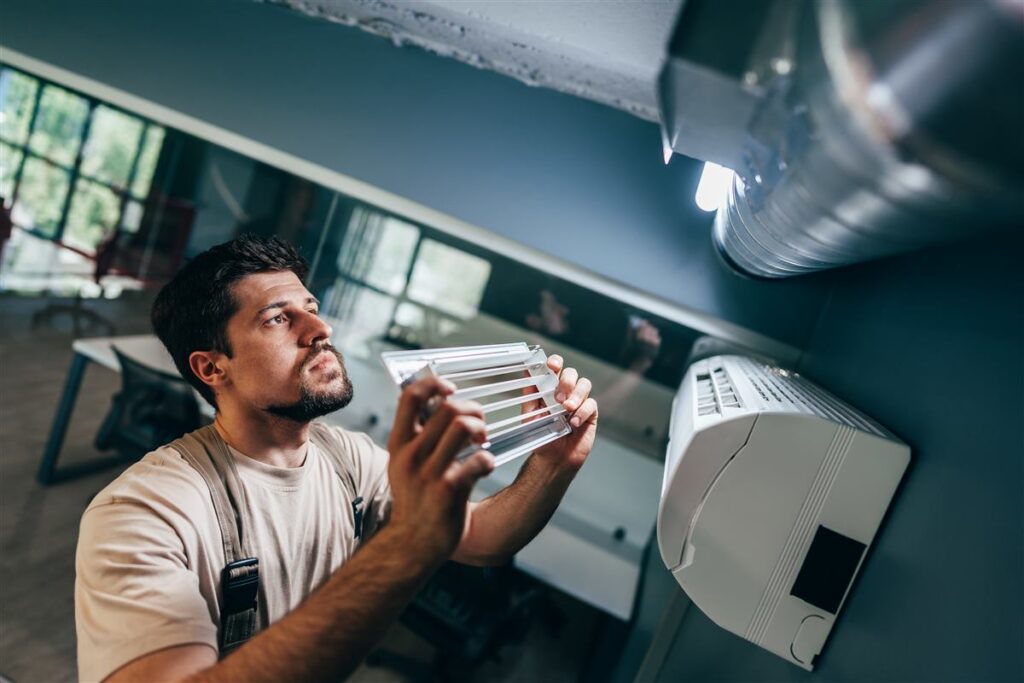
Commercial HVAC Maintenance by Business Type
Every building has its own stress points. A good commercial HVAC maintenance plan is built around how you actually use the space, not a generic checklist copied from a home visit.
Restaurants and cafes
Kitchen heat, grease and constant door traffic make restaurants the toughest environment for an air conditioner. Grease-laden air coats return grilles, filters and evaporator coils, which cuts airflow and lets the coil freeze. Most restaurants need commercial AC maintenance on a tighter schedule than the other tenants in their plaza. Filters in dining rooms near the kitchen often need changing far more often than anywhere else. Ask your technician to check how the kitchen exhaust and the dining room supply air work together, since a strong exhaust can pull hot, humid outdoor air into the building.
Retail stores
Shops lose cool air every time the front door opens, and display lighting adds steady heat. Commercial AC service for retail usually focuses on airflow near entrances, thermostat placement and schedules that match opening hours. A thermostat mounted near a sunny window or a door can make the system run far longer than it needs to. Moving it is a small fix that a commercial AC maintenance visit can point out.
Salons and spas
Hair dryers, hot tools and chemical products add heat and fumes. Filters load up quickly with fine particles, and coils can pick up a residue that holds dust. Steady ventilation matters for staff comfort. Ask for commercial HVAC maintenance visits that include a quick filter check between full tune-ups. Our South Florida indoor air quality guide explains the filtration and ventilation options that can help.
Medical, dental and professional offices
Offices with patients, clients or sensitive equipment care about consistent temperature, humidity and quiet operation. Server closets and equipment rooms may need their own cooling. For these spaces, commercial AC maintenance should include checking that any dedicated units are running correctly, since a small closet unit can fail without anyone noticing until equipment overheats.
What Your Staff Can Do Between Commercial AC Service Visits
Scheduled commercial HVAC maintenance catches most problems, but the people in the building every day are your first line of defense. A short routine, posted near the thermostat or in the manager’s office, helps catch issues early between commercial AC service appointments.
- Keep supply vents and return grilles clear of boxes, racks and furniture.
- Note any new noise, smell or water stain and report it the same day.
- Check that the thermostat schedule still matches your hours after holidays or power outages.
- Keep doors closed when possible, especially on hot, humid afternoons.
- Look at the outdoor or rooftop area after storms for debris near the equipment, from the ground only.
Staff should never open electrical panels or climb onto the roof to look at equipment. Rooftop work needs proper access and safety equipment. If the system keeps shutting down, our article on an AC that keeps tripping the breaker explains why repeated resets are a bad idea.
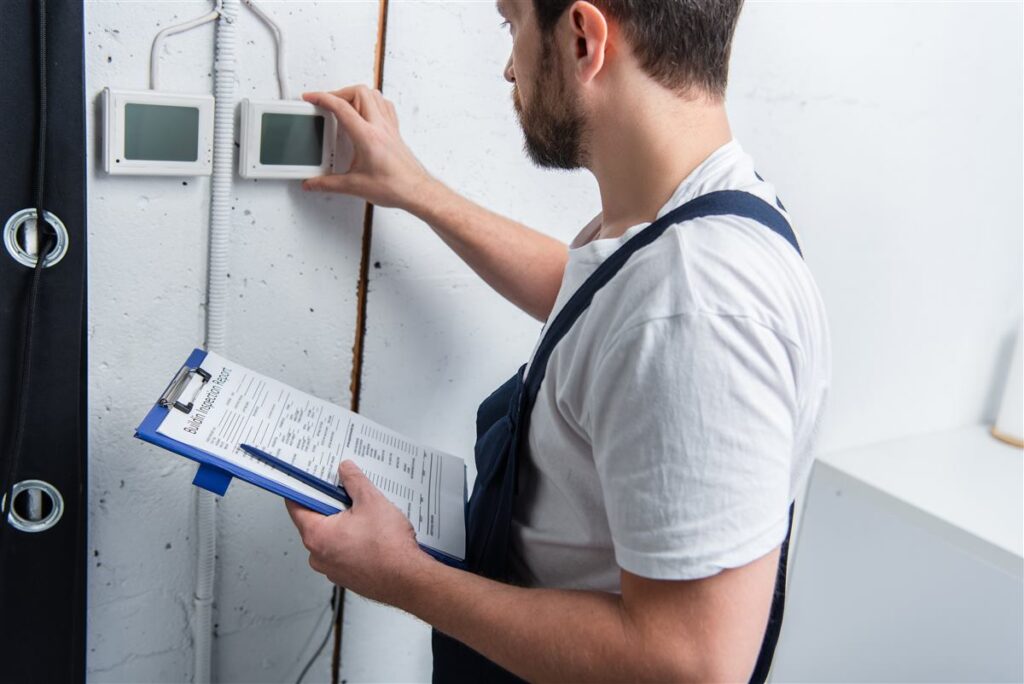
Commercial AC Maintenance and Your Energy Bill
For many small businesses, cooling is one of the biggest monthly utility costs. Commercial AC maintenance protects that budget in a few practical ways that build on each other.
Clean condenser coils let the system shed heat easily, so the compressor doesn’t work as hard. Clean evaporator coils and filters keep air moving, which shortens run times. Correct refrigerant performance means the equipment delivers the cooling it was designed for. Thermostat schedules that match your hours stop you from paying to cool an empty building overnight or on Sundays. Each of these items is part of routine commercial HVAC maintenance.
When it comes time to replace a unit, efficiency ratings matter more for a business than a home because the equipment runs more hours. Our SEER2 ratings guide explains how to compare efficiency levels when you get quotes.
Humidity, Mold and Water Damage in Commercial Spaces
Florida businesses fight humidity as much as heat. When a system can’t remove enough moisture, the space feels clammy, ceiling tiles sag and musty odors creep in. That hurts customer impressions and can damage stock like paper goods, fabrics and electronics.
Consistent commercial HVAC maintenance keeps drain lines flowing and coils clean, which is the foundation of good humidity control. Oversized equipment, a blower set too fast or long door-open periods can still leave the air damp. Our article on AC humidity problems covers the usual causes.
Water is the other risk. A clogged drain in an office suite or a shop can soak ceiling tiles, inventory and the business below. Drain checks are a core part of commercial AC maintenance for exactly this reason. If you see water near an air handler, our guide to AC leaks and water damage explains what to check while you wait for a technician.
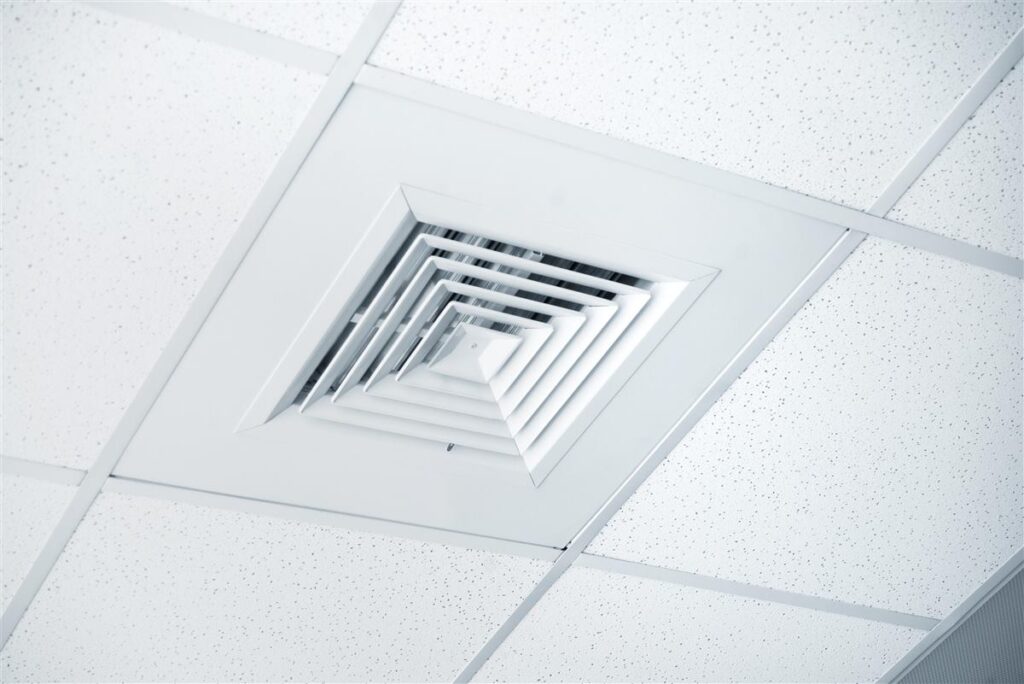
Planning for Replacement Before It Becomes an Emergency
Every commercial unit eventually reaches the point where repairs no longer make financial sense. The worst time to find that out is a Saturday in August. Good commercial HVAC maintenance records let you see that point coming.
Ask for a written summary after every commercial AC service call and keep a simple log for each unit: install date, model and serial number, every repair and what it was for. Patterns tell the story. A unit that needs a capacitor once in several years is healthy. A unit that needs a major part every summer is costing you downtime as well as repair bills.
When the log shows a unit is struggling, ask for an honest comparison of repairing versus replacing it. Our AC repair vs replacement guide walks through the same factors a business owner should weigh, and replacing on your schedule usually means less disruption than replacing after a failure. Regular commercial AC service also gives you an informed opinion from someone who already knows the unit.
Building a Commercial AC Maintenance Budget
Small business owners often treat the AC as a surprise expense. A better approach is to give it its own line in the yearly budget, the same way you plan for insurance or rent increases. That turns a scary unknown into a predictable cost.
A practical budget has four parts:
- Scheduled visits. The cost of your service agreement or planned tune-ups for each unit.
- Filters and small parts. Busy spaces go through filters quickly, so plan for them separately.
- A repair reserve. Set aside something each month for the repairs that will happen even on well-kept equipment.
- A replacement fund. Use the age and condition notes from each commercial HVAC maintenance visit to estimate when each unit will need replacing.
Ask your technician to flag any unit that is likely to need major work in the next year or two. With that warning, you can plan the timing, compare options calmly and avoid an emergency decision in the middle of summer.
Coastal and rooftop considerations
Businesses near the ocean or the Intracoastal, from Boynton Beach down to Boca Raton, deal with salt air that corrodes coil fins, cabinets and electrical connections. Rooftop units also take direct sun and wind-driven rain. Commercial AC service in these locations should include a close look at corrosion, loose panels and fasteners, and coil condition. Rinsing coils on a schedule and catching rust early can add useful years to equipment that would otherwise wear out quickly.
Make sure your technician can reach rooftop equipment safely. Clear roof access, a working hatch or ladder and a known contact person for the building speed up every visit and keep costs down.
How to Choose a Commercial AC Service Provider
The right provider makes maintenance easy to keep up with. When you compare companies for commercial AC service, ask these questions:
- Are you licensed in Florida, and can I verify the license number?
- Will you work around our opening hours?
- Do you give a written report after each visit?
- Do you give a price before any repair work starts?
- Which equipment brands do you work on?
- How do service agreement customers get scheduled when something breaks?
Cold Chillin Air Conditioning is owner-operated and licensed (CAC 1823036). We work on Carrier, Trane, Lennox, Rheem, Goodman and other major brands, explain what we find in plain language and give an upfront price before any work starts. Our AC repair service covers businesses across Palm Beach County.
Signs of Short Cycling and Other Problems Managers Miss
Some warning signs are easy to overlook in a busy workplace. A system that turns on and off every few minutes is short cycling, which wastes power and wears out parts. Our short cycling guide explains the common causes.
Other quiet signs include a rooftop unit that runs late into the night after closing, filters that look clogged soon after a change, and staff adjusting the thermostat more often than usual. Any of these is worth reporting right away. They are also worth mentioning at your next commercial AC maintenance visit, or sooner if comfort is slipping.
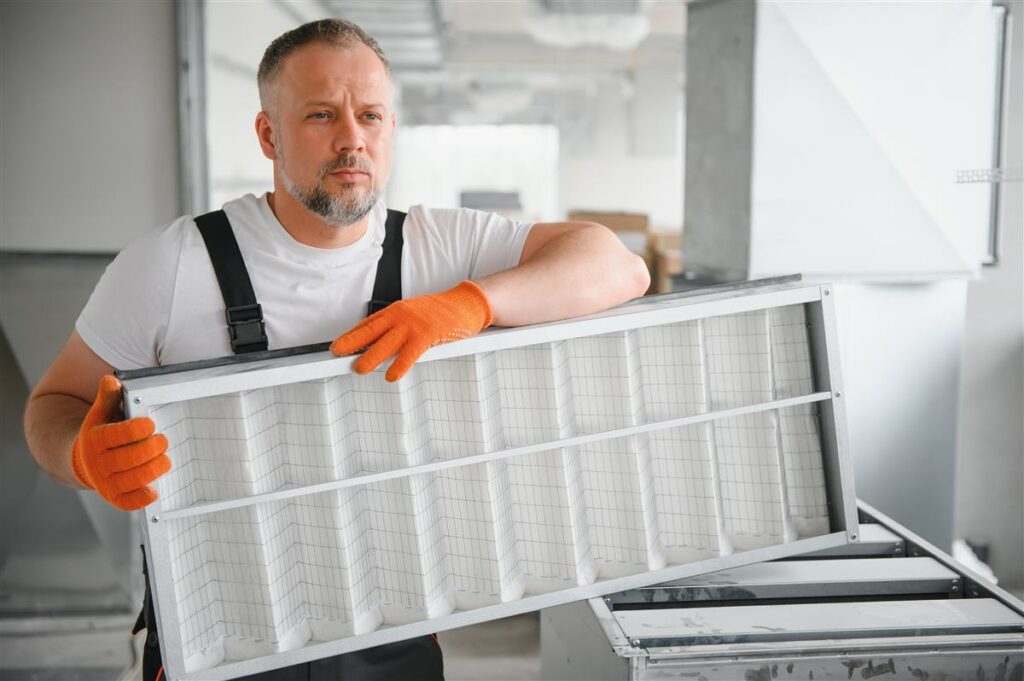
More Questions About Commercial AC Maintenance
Is commercial HVAC maintenance different from residential service?
The basics are similar, but the scale and the stakes are different. Commercial equipment often includes rooftop package units, belt-driven blowers and multiple systems in one building. Commercial AC maintenance visits are usually more frequent, records matter more and scheduling has to work around customers and staff.
Can a service agreement cover several units?
Yes. A plan can cover every unit in your space so they’re all checked on the same schedule. Grouping units into one commercial AC service plan also keeps your records in one place. See how our service agreement plans work, and call to talk about the right setup for your building.
What should we do if the AC fails during business hours?
Turn the system off if it is running without cooling, note any error codes or noises, and call. We offer same-day commercial AC service when the schedule allows, and we’ll explain the cause and the price before any repair begins.
Do you cover businesses in the northern part of the county?
Yes. Along with Boynton Beach and the cities listed above, we work with businesses in Palm Beach Gardens and Jupiter. Commercial HVAC maintenance visits are scheduled ahead, so distance is rarely a problem.
How long does a commercial maintenance visit take?
It depends on the number and type of units. A single small system may take an hour or so, while a building with several rooftop units takes longer. We’ll give you a realistic time window so you can plan around it. Many owners book commercial HVAC maintenance for early morning or a slow weekday to keep disruption low.
Want to see recent jobs and seasonal AC tips? Follow Cold Chillin on our Facebook page.