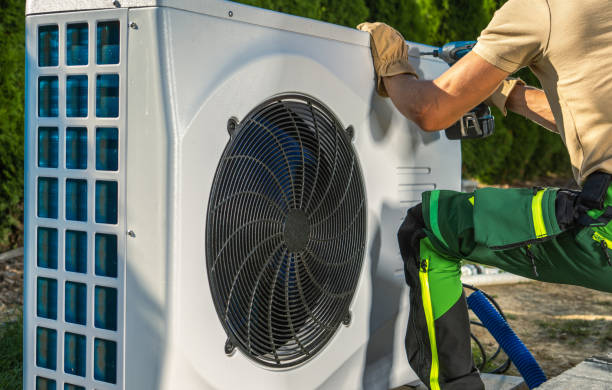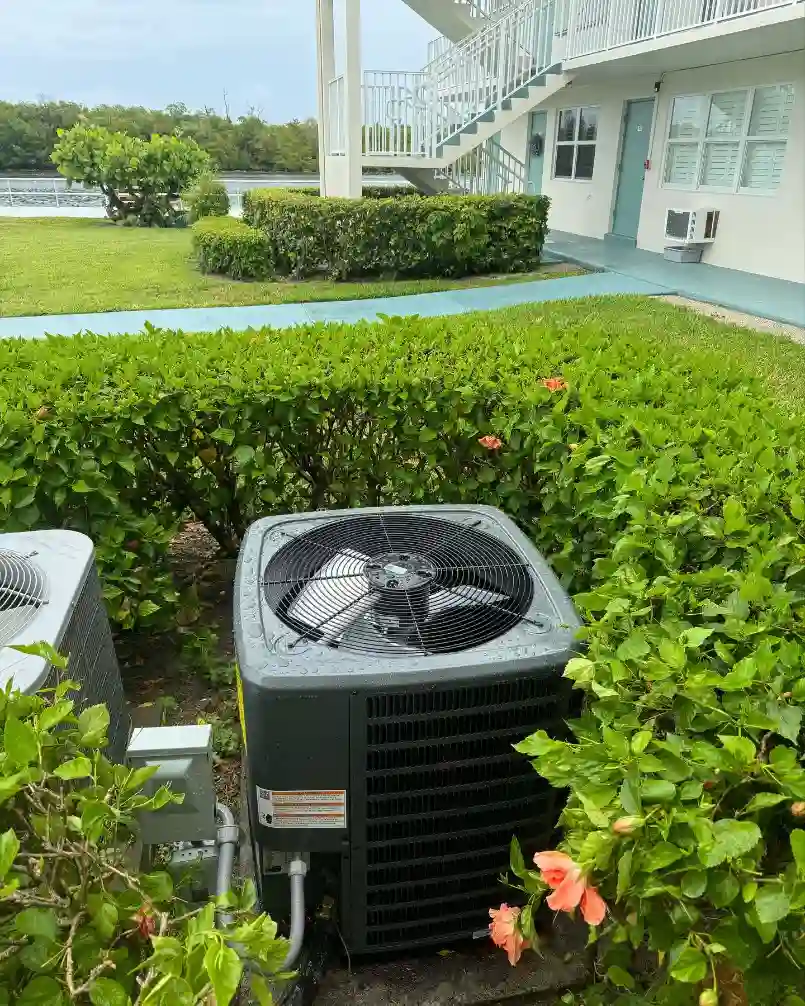

Refrigerant (many people still call it Freon, which is an old brand name) is what carries heat out of your home. Your AC doesn’t use it up like fuel. It circulates in a sealed loop for the life of the system. So if a system is low on refrigerant, there’s only one explanation: it has a leak.
Here are the signs to watch for, why “just add some refrigerant” is the wrong answer, and what a proper repair looks like for Palm Beach County homeowners.
7 signs your AC is low on refrigerant
1. Air from the vents isn’t as cold as it used to be
Less refrigerant means less heat moved out of the house. Air from the vents feels cool rather than cold, and the house struggles to reach the thermostat setting on hot afternoons.
2. The system runs and runs
Because it’s removing heat more slowly, the AC runs longer cycles, or never shuts off at all in summer.
3. Ice on the copper lines or the indoor coil
It sounds backwards, but low refrigerant drops the pressure, and the temperature, inside the evaporator coil below freezing. Humidity in the air turns to ice on the coil and the larger copper line. If you see ice, turn the system off and let it thaw. Our guide to why AC units freeze up covers the other causes too.
4. Hissing or bubbling sounds
A larger leak can make a hissing sound near the indoor coil or along the refrigerant lines. A bubbling sound can also point to refrigerant issues. More on that in our AC noise guide.
5. Higher FPL bills
A system running longer to do less work uses more electricity. A jump in your bill without a change in how you use the house is often the first clue.
6. The house feels humid
An AC low on refrigerant removes less moisture. In South Florida that shows up quickly as a sticky, clammy house. See AC humidity problems.
7. Water dripping when the ice melts
When an iced-up coil thaws, it can release more water than the drain pan handles, leading to drips or overflow around the air handler.
Why “topping off” isn’t a repair
Adding refrigerant without finding the leak gets the system cooling again, for a while. Then it leaks out again, and you pay again. Meanwhile the compressor has been running under strain, which shortens its life. Refrigerant isn’t cheap, especially for older systems that use R-22 or R-410A, whose supply is being reduced under federal rules. Our article on the R-410A phase-out explains what that means for Florida homeowners.
A proper repair finds the leak, fixes it, confirms the system holds pressure, and then charges it to the manufacturer’s specification.
Where AC leaks usually happen
- The indoor evaporator coil. Small pinhole leaks from corrosion are common, particularly in humid climates.
- Brazed joints and fittings on the line set and at the outdoor unit.
- Service valves and Schrader cores (the caps where gauges connect).
- The outdoor coil, especially near the coast where salt air speeds up corrosion.
- Line sets damaged by lawn equipment, rubbing against a wall, or vibration over time.
How a technician finds the leak
A technician will check pressures and temperatures to confirm the system is undercharged, then search for the leak with an electronic leak detector, bubble solution, UV dye or a nitrogen pressure test, depending on the system. Some leaks are easy to fix (a valve core or a fitting). A leaking coil may need replacement. On older systems, a coil or compressor replacement is often when homeowners weigh repair versus replacement.
Don’t try to recharge it yourself
Under EPA rules, handling refrigerant for home AC systems requires certification. DIY recharge kits sold for cars are not for home systems, and overcharging can damage the compressor just as undercharging can. This is a job for a licensed HVAC technician.
Frequently asked questions
Does an AC need refrigerant added every year?
No. A properly sealed system should never need more refrigerant. If yours does, it has a leak.
Is a refrigerant leak dangerous?
The refrigerants in home AC systems are not generally a hazard in the small amounts that leak slowly, but the system shouldn’t keep running while low because it can damage the compressor.
How much does it cost to fix a refrigerant leak?
It depends on where the leak is and what refrigerant your system uses. A valve or fitting repair costs much less than a coil replacement. See our AC repair cost guide.
Think your AC has a leak? Call Cold Chillin
We find and fix refrigerant leaks across Boynton Beach, Boca Raton, Delray Beach, Palm Beach Gardens and the rest of Palm Beach County. Licensed (CAC 1823036) and often same-day. Call (561) 318-1882 or request service online. More on our AC repair services.