Why Does My Home Feel Sticky Even With the AC Running? (Boynton Beach Humidity Guide)
Your thermostat says 74°F. The AC is running. And you’re still uncomfortable.
That sticky, damp feeling isn’t in your head — it’s humidity. And in Boynton Beach, it’s one of the most common complaints we hear from homeowners. The frustrating part is that most people assume the fix is to turn the thermostat down further. It isn’t. That just makes the problem worse and the FPL bill higher.
Here’s what’s actually happening, and what actually fixes it.
Your AC Is a Dehumidifier — But Only If It’s Sized Right
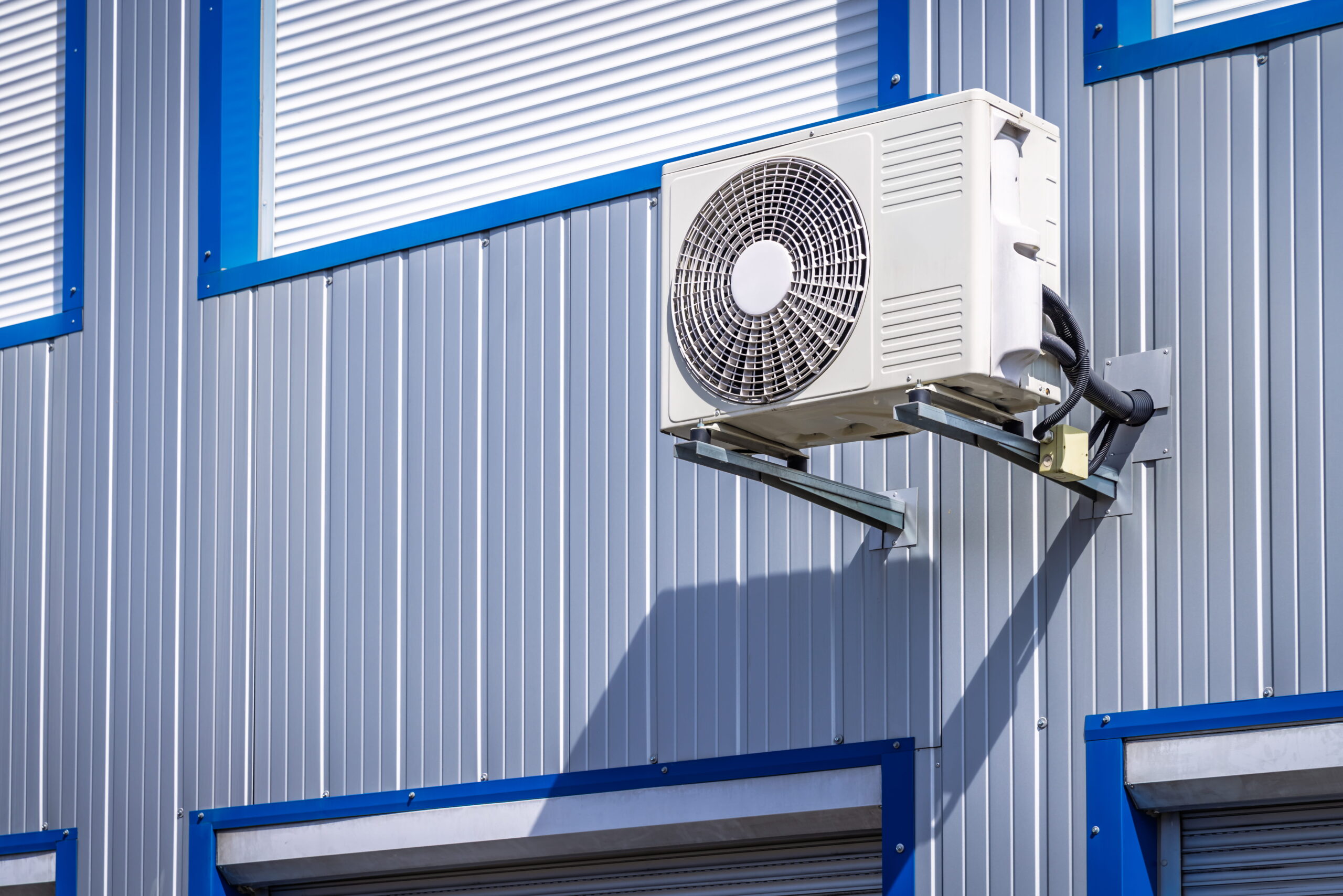
Air conditioning removes humidity from your home as a byproduct of cooling. As warm air passes over the cold evaporator coil, moisture condenses on the coil and drains out through the condensate line. That’s why your outdoor AC unit drips water — it’s pulled from your indoor air.
The key phrase there is “as warm air passes over the coil.” Dehumidification only happens when the AC is in a cooling cycle — compressor running, refrigerant flowing. Short cycles don’t dehumidify effectively.
And this is where the most common humidity problem comes from.
The #1 Cause of Humidity Problems in Florida Homes: Oversized AC Systems
It seems counterintuitive, but an air conditioner that’s too large for your home is the leading cause of chronic humidity problems in Palm Beach County.
Here’s why: an oversized system cools the air so quickly that it hits the thermostat set point before it’s had enough run time to remove meaningful moisture. The compressor shuts off after a short cycle. The house feels “cool” but damp.
This is called short cycling, and it’s brutal on both comfort and equipment.
The solution isn’t a thermostat adjustment — it’s a properly sized replacement system. If your system is new and your home has always felt damp, this is very likely what happened during installation.
Other Reasons Your Home Stays Humid Even With AC Running
Old or Degraded Equipment
As AC systems age — particularly past 10–12 years — they lose the ability to dehumidify efficiently. The evaporator coil can develop buildup that reduces its ability to condense moisture. Refrigerant levels drop over time from minor leaks. The result is a system that runs but doesn’t do the full job.
Duct Leaks
If your duct system is pulling unconditioned air from a hot, humid attic into your living space, you’re fighting a losing battle. Every BTU the system removes gets replaced with humid attic air infiltrating through leaks. Duct sealing addresses this directly.
Poor Ventilation and Air Sealing
Older Boynton Beach homes — particularly those without modern weatherstripping — allow humid outdoor air to leak in around doors, windows, electrical outlets, and plumbing penetrations. Your AC is competing against the outdoors. Improving air sealing (a home energy audit can identify the worst culprits) reduces the moisture load your AC has to handle.
The Thermostat Fan Setting Is Set to “ON” Instead of “AUTO”
This one trips people up regularly. If your thermostat fan is set to “ON,” the blower runs continuously — even when the compressor isn’t in a cooling cycle. During the off cycle, warm humid air moves through the system and some of the moisture that condensed on the coil evaporates back into your air.
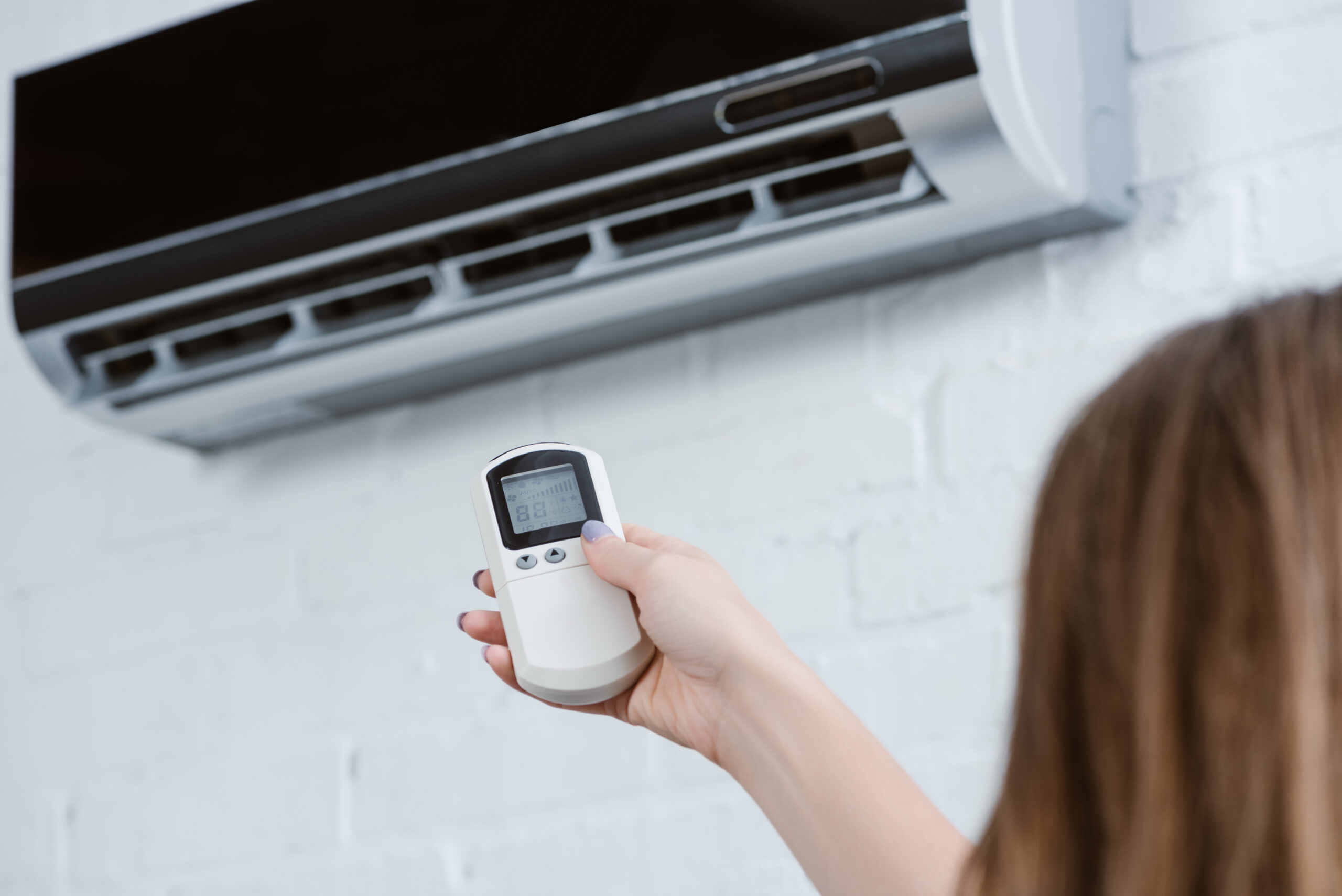
Fix: Set your thermostat fan to “AUTO.” The blower should only run when the compressor is actively cooling.
When Is a Dehumidifier the Right Answer?
If your AC system is correctly sized and in good working order but your home still feels humid, a whole-home dehumidifier may be the right addition.
A whole-home dehumidifier installs inline with your existing HVAC system (usually at the air handler). It runs independently of the AC, pulling moisture out of the air even when the thermostat set point has been reached. This lets your AC focus on temperature while the dehumidifier handles the moisture.
Signs a whole-home dehumidifier makes sense:
- Humidity consistently reads above 55% indoors
- Musty odors that persist even with a clean AC system
- Windows fogging or sweating on the interior
- Mold reappearing in bathrooms despite regular cleaning
- Family members with allergies or asthma seeing worsened symptoms indoors
Whole-home dehumidifiers from brands like Aprilaire or Santa Fe are sized by pint capacity per day and tied to your home’s square footage. A licensed HVAC tech should size the unit — undersizing it is almost as bad as having none at all in Florida’s climate.
What Humidity Level Should My Home Be At?
The EPA recommends keeping indoor relative humidity between 30–50%. In practice, most Florida homes run best around 45–55% — going below 45% can cause wood floors to crack and static electricity issues.
If your indoor humidity is regularly above 60%, you’re in mold and dust mite territory. Mold can begin growing on surfaces within 24–48 hours at high humidity, especially in a warm environment.
A simple $15–$25 digital hygrometer (available at any hardware store) tells you exactly where your home’s humidity stands.
How to Check Your Home’s Humidity Right Now
- Pick up a digital hygrometer from a hardware store or order one online ($15–$25).
- Place it in a central room, away from exterior walls and vents.
- Check the reading after it’s been running for 30 minutes.
- If it reads above 55% with the AC on, you have a humidity control problem worth addressing.
The Full Comfort Picture in South Florida
Temperature is only half of what makes a home feel comfortable in Boynton Beach. The other half is humidity. Running your AC colder doesn’t fix a humidity problem — it just wastes energy and makes the house feel cold and damp instead of warm and damp.
The right fix depends on the root cause: a properly sized system, a dehumidifier, duct sealing, or thermostat settings. We’ve helped homeowners across Palm Beach County solve exactly this problem.
If your home never quite feels right with the AC on, give us a call. We’ll diagnose what’s actually happening — not just sell you a solution.
Cold Chillin Air Conditioning — Boynton Beach & Palm Beach County. 561-318-1882 or book online.
📋 IMPLEMENTATION NOTES
| # | Post Title | Target Keyword | Estimated Word Count |
|---|---|---|---|
| 1 | Why Is My AC Leaking Water in Boynton Beach? | ac leaking water boynton beach | ~1,150 |
| 2 | Duct Cleaning in Boynton Beach: Is It Worth It? | duct cleaning boynton beach | ~1,200 |
| 3 | Mini Split AC Installation Boynton Beach | mini split installation boynton beach | ~1,400 |
| 4 | How to Lower Your FPL Bill in Boynton Beach | lower fpl bill boynton beach | ~1,350 |
| 5 | Why Does My Home Feel Sticky With AC On | ac humidity problems boynton beach | ~1,250 |
RankMath Settings for Each Post:
- Set Focus Keyword as listed above
- Enable FAQ Schema on posts 1, 2, and 4 (add FAQ block at bottom of post in Elementor)
- Add HowTo Schema on posts 3 and 5 via WPCode if applicable
- Internal links: each post must link to at least one service page + Contact Us
- Image alt text: use “[keyword] [location]” format
- Publish 1 post per week to maintain consistent crawl cadence
Content Gaps Covered (vs Existing Blog):
- ✅ Water leaks (new angle — existing blog has no leak post)
- ✅ Duct cleaning (not covered anywhere on site)
- ✅ Mini splits (not covered anywhere on site)
- ✅ FPL / energy savings (not covered, high search volume in FL)
- ✅ Humidity control (not covered — major Florida-specific pain point)
Keyword Cannibalization Check:
- None of these 5 posts overlap with existing posts on: emergency repair, AC lifespan, maintenance tips, repair vs replace, or cost
FAQ Section (Great for Rich Results)
Why is my house humid even when the AC is running?
If your AC is oversized, low on refrigerant, has dirty coils, or your home has duct leaks, it may cool the air without removing enough moisture.
Should I lower my thermostat to remove humidity?
No. Lowering the thermostat usually doesn’t solve humidity problems. It often increases energy use without improving comfort.
What indoor humidity level is best?
Most Florida homes are most comfortable between 45% and 55% relative humidity.
Can an old AC cause humidity problems?
Yes. Older systems often lose dehumidifying performance because of dirty coils, worn components, or low refrigerant.
Do I need a whole-home dehumidifier?
If your AC is working properly but indoor humidity stays above 55%, a whole-home dehumidifier may be the best solution.