Every summer, Palm Beach County homeowners stock up on water, gas up the car, and put up the shutters. One thing that almost always gets left off the list: the air conditioner sitting outside, exposed to every bit of wind, rain, debris, and power surge a storm can throw at it.
That’s a costly oversight. Your condenser is one of the most expensive pieces of equipment on your property, and it’s the part most in the line of fire during a hurricane. Worse, if it gets knocked out, you’ll be sweating through the aftermath in Florida heat while every HVAC company in the county is slammed with service calls.
Hurricane season runs June 1 through November 30, with the most active stretch typically from mid-August through mid-October. This guide walks you through exactly how to protect your AC — well before a storm forms, in the final hours before it hits, and in the critical moments after it passes.
Why Your AC Is So Vulnerable in a Storm
Your outdoor unit faces four distinct threats during a hurricane, and each one can end its life:
- High winds and flying debris. Sustained hurricane winds in Florida can exceed 110 mph. At those speeds, patio furniture, branches, and loose yard items become projectiles that bend coil fins or crack the unit outright.
- Power surges. This is the big one. When the grid flickers or comes back online after an outage, the voltage spike can fry your compressor or control board in an instant. Florida also sees more lightning than almost anywhere in the country, and a nearby strike can send a surge straight into your system.
- Flooding and storm surge. Water rising into the electrical components of your condenser can destroy it, and coastal and low-lying Palm Beach County neighborhoods are especially exposed.
- Wind-driven rain and debris pulled into a running system. If your AC is on when the storm hits, it can suck moisture and grit into places they don’t belong.
The encouraging part: with a little planning, your air conditioner can ride out a hurricane just fine. Let’s start with the work you do before a storm is even on the radar.
Before Hurricane Season: Get Ahead of the Storm
The best protection happens weeks before any storm forms — not while you’re scrambling with a tarp in 40 mph gusts.
Make Sure Your Condenser Is Properly Anchored
The single most important pre-season step is confirming your outdoor unit can’t move. The Florida Building Code requires condensers to be secured to a pad, and properly installed hurricane straps and anchoring can hold a unit through extremely high winds. Even a 200-pound condenser can be shifted or toppled by a strong enough gust.
If your system was installed by a licensed contractor, it was almost certainly anchored correctly. But homes change hands, pads settle, and hardware corrodes in our salt air. Walk out and check that the unit is bolted down solid and the straps aren’t rusted through. If anything looks loose, have it addressed before June.
Install an HVAC Surge Protector
If you do only one thing on this list, do this one. A surge protector made specifically for HVAC equipment guards your compressor and control board against the post-outage voltage spikes that are a leading cause of storm-related AC failures. It costs a small fraction of what a new compressor does, and it protects you during ordinary Florida thunderstorms too, not just hurricanes.
Have it installed by a professional — a whole-system surge protector wires into your equipment, unlike a plug-in power strip. FPL also offers a surge-protection program for home appliances through its FPL Home subsidiary, which is worth looking into as an added layer. Ask your technician which approach fits your setup during your next service visit.
Schedule a Pre-Season Inspection
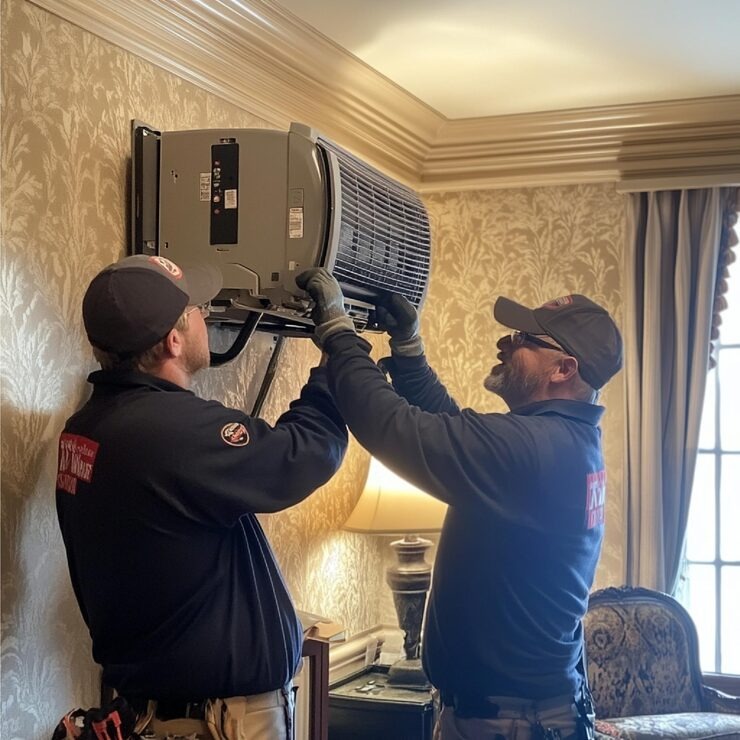
A pre-storm checkup is a storm-season “health check” for your system. A technician confirms your anchoring is solid, your surge protection is in place, your drainage is clear, and your electrical connections are tight — so nothing catches you off guard when a storm forms. It’s also the ideal time to catch a weak capacitor or a refrigerant issue that a storm’s stress could turn into a full breakdown.
This is exactly the kind of visit our AC maintenance team handles, and homeowners on a service agreement get it built right into their plan. Booking early matters — once a named storm is in the forecast, every schedule in Palm Beach County fills up fast.
Trim Trees and Clear Drainage
Cut back any branches hanging over or near your condenser. In high winds those limbs snap and fall with real force. While you’re at it, make sure the area around the unit drains well and isn’t a spot where water pools. Good year-round drainage reduces flood risk when the heavy rain arrives.
If You’re in a Flood Zone, Consider Elevating
Homes in low-lying or flood-prone parts of the county face an extra risk: rising water reaching the electrical guts of the condenser. If that describes your property, talk to your HVAC contractor about elevating the outdoor unit on a raised platform. Even a few extra inches of clearance can be the difference between a working system and a flooded one after a surge event.
Understand What a Generator Can (and Can’t) Do
A backup generator keeps your fridge, fans, and lights running through an outage — but be realistic about central air. A small portable generator generally can’t power a central AC system; that takes a large portable unit sized for the load or, more reliably, a permanently installed whole-home standby generator. If riding out multi-day outages in comfort matters to you, plan the generator around your AC’s actual requirements rather than assuming any unit will do.
In the Final Hours Before the Storm
Once a storm is bearing down and conditions are still safe outside, run through these steps.
Pre-Cool Your Home
A few hours before the storm arrives, drop your thermostat several degrees below your normal setting. A well-insulated Florida home holds that cooler, drier air for a while after the power goes out — buying you comfort during the early hours of an outage. Run the system for several hours before you shut it down.
Clear Every Loose Object From the Yard
Bring in or secure patio furniture, potted plants, grills, tools, toys, and decorative rock. In a hurricane, anything the wind can lift becomes a projectile aimed at your condenser’s fragile coil fins — and at your windows.
Turn the System Off — at the Thermostat AND the Breaker
This is the most important storm-day step, and the most commonly skipped. Switch the AC off at the thermostat, then shut it off at the breaker. Two reasons:
- It stops surge damage. With the breaker off, the voltage spike that comes when power is restored can’t reach your electronics.
- It prevents debris and moisture from being pulled into a running system.
If you have a smart thermostat, don’t rely on a programmed schedule during a storm — make sure you know how to power the system down manually.
The Cover Debate: Should You Wrap Your AC?
Homeowners ask us this constantly, and the honest answer is: it depends, and it’s easy to get wrong.
A standard AC cover meant for off-season storage is not built for hurricane-force winds. A loosely secured cover can be ripped off and become a projectile itself, or it can trap moisture against the unit and cause corrosion. If you choose to cover the condenser, use material rated for high wind — a properly secured heavy tarp, or plywood to guard against large projectiles — and fasten it well.
Two hard rules if you cover it: never run the AC while it’s covered, and remove the cover as soon as the storm passes so moisture doesn’t get trapped inside. For many homeowners, clearing the debris and shutting the system down at the breaker offers better real-world protection than a cover does.
Window AC Units: Take Them Out
If you use a window unit anywhere in the home, remove it before the storm and close and secure the window. Window units are notorious for being ripped right out of the frame by high winds, which damages the unit and leaves a wide-open hole in your home’s envelope.
During the Storm: Leave It Off
Keep the system shut down and stay inside. Running your AC during a hurricane exposes it to erratic power interruptions that stress the compressor, plus the wind-driven rain and debris we’ve already covered. No thermostat setting is worth a fried compressor. Wait it out.
After the Storm: Inspect Before You Restart
The temptation once power returns is to flip everything back on and cool the house down. Resist it for a few minutes — this is where hasty homeowners turn a survivable situation into an expensive one.
Wait for Stable Power, Then Inspect
Give the power at least half an hour to stabilize once it returns. Then, from a safe position and watching for downed lines or standing water, visually inspect the outdoor unit:
- Is there standing water around or in the unit?
- Is there debris lodged in the fan or coil?
- Are there any obvious signs of impact, or displaced or damaged lines?
Don’t Power On a Damaged System
If you see flooding, debris, or damage, do not turn the system on. Storm winds can loosen internal connections and lead to refrigerant leaks, and running a compromised unit can turn a repairable problem into a replacement. When in doubt, keep it off and call a professional to check it first.
But Don’t Wait Too Long, Either
Here’s the balance: once you’ve confirmed the system is undamaged and power is stable, turn it back on reasonably soon. Your home just went through a high-heat, high-moisture event — the perfect breeding ground for mold and mildew in your system and ductwork. Getting clean, conditioned, dehumidified air moving again helps protect your indoor air quality. (If storm flooding has you worried about mold and humidity indoors, our guide to indoor air quality in South Florida is worth a read.)
When to Call a Pro
Call a technician before restarting if the unit was exposed to flooding, took a visible hit from debris, sat through a nearby lightning strike, or makes any unusual noise when it powers up. Strange sounds on startup can point to damaged fan blades, a failing capacitor, or a compressor problem. After a major storm, our AC repair line stays busy — if your system took damage, our emergency AC repair team is here for Boynton Beach and the surrounding communities.
Your Hurricane-Season AC Checklist
Keep this somewhere handy:
Before the season: anchor the condenser, install a surge protector, book a pre-season inspection, trim overhanging branches, address drainage, elevate if you’re in a flood zone.
Final hours before the storm: pre-cool the home, clear all loose objects, remove window units, shut off at the thermostat and the breaker, cover only with high-wind-rated material.
During: keep it off, stay inside.
After: wait for stable power, inspect for water and debris, don’t restart a damaged unit, call a pro if there’s any sign of trouble, then restore cooling promptly to fight mold.
Frequently Asked Questions
Should I turn my AC off during a hurricane?
Yes — absolutely. Turn it off at the thermostat and then at the breaker before the storm arrives. This protects the electronics from the power surge when electricity is restored and prevents wind-driven rain and debris from being pulled into a running system.
Should I cover my AC unit during a hurricane?
Only with material rated for high winds, and only if it’s properly secured. A loose or storage-grade cover can blow off and become a hazard or trap moisture against the unit. Never run the system while it’s covered, and remove the cover immediately after the storm. For many homeowners, clearing debris and shutting off the breaker protects the unit better than a cover.
Will a power surge really damage my air conditioner?
Yes, and it’s one of the most common causes of storm-related AC failure in Florida. The voltage spike when power returns after an outage — or a nearby lightning strike — can destroy the compressor or control board. A dedicated HVAC surge protector costs far less than those repairs.
When can I turn my AC back on after a storm?
Wait until floodwaters have receded and power has been stable for at least 30 minutes. Visually inspect the outdoor unit for water, debris, or damage first. If it looks clear and undamaged, restart it. If there’s any sign of flooding or impact, keep it off and call a professional before powering on.
Can I run my central AC on a generator during an outage?
Usually not on a small portable generator — central AC systems draw more power than those can supply. You’d need a large portable unit sized for the load or, better, a whole-home standby generator installed for the purpose. Plan around your system’s actual power requirements rather than assuming any generator will run it.
Do I really need a pre-season AC inspection?
It’s one of the highest-value things you can do. A pre-season visit confirms your anchoring, surge protection, drainage, and electrical connections are storm-ready, and catches small problems before the stress of a storm turns them into a breakdown. Book it early — schedules fill the moment a storm enters the forecast.
Don’t Wait for the Cone to Point at Us
The worst time to think about your air conditioner is during the storm — or in the sweltering days after, when every HVAC company in Palm Beach County is booked solid. A little preparation now protects an expensive system and keeps your family comfortable when the power comes back.
Cold Chillin Air Conditioning helps homeowners get storm-ready with pre-season inspections, professional surge-protector installation, secure anchoring, and fast repair when a storm does its damage. We’re licensed and insured (CAC 1823036) and proud to serve Boynton Beach, Delray Beach, Lake Worth, Lantana, Boca Raton, West Palm Beach, and the surrounding Palm Beach County area.
Call (561) 318-1882 or book your pre-season inspection online today. Let’s make sure your AC is ready before the next storm forms.