A healthy air conditioner in a Florida summer runs in long, steady cycles, often 15 minutes or more at a time, then rests. If yours kicks on, runs for three or four minutes, shuts off and starts again shortly after, it’s short cycling. It’s one of the most common calls we get in Boynton Beach, and it’s worth taking seriously: short cycling wears out the compressor, drives up your FPL bill and leaves the house feeling damp because the system never runs long enough to pull moisture out of the air.
What short cycling looks like
- The outdoor unit starts and stops every few minutes
- The house cools a little, then warms again quickly
- Indoor air feels clammy even at a low thermostat setting
- Energy bills are higher than usual for the season
A system that runs constantly is a different problem (usually low capacity, a refrigerant leak or a dirty coil). Our guide to why an AC isn’t cooling covers that.
7 common causes of short cycling
1. A clogged air filter
Restricted airflow makes the indoor coil too cold, and safety controls can shut the system down early. It’s the cheapest fix on this list, so check it first.
2. Thermostat placement or failure
A thermostat in direct sun, next to a supply vent or near a kitchen reads the wrong temperature and tells the system to stop too soon. Weak batteries and failing thermostats can do the same. If the thermostat sits right beside a vent, relocating it can solve the problem.
3. An oversized air conditioner
This is the most common cause we find in Palm Beach County homes. A unit that’s too big for the house cools the air near the thermostat very fast, then shuts off before the rest of the house, and the humidity, catch up. Bigger is not better. Correct sizing needs a load calculation, which we explain in how to size an AC for a Florida home.
4. Low refrigerant from a leak
Low refrigerant drops pressure in the system, and the low-pressure switch shuts the compressor off to protect it. Once pressure rebalances, it starts again, and the cycle repeats. Low refrigerant always means a leak. See signs your AC is low on refrigerant.
5. Dirty condenser or evaporator coils
Coils that can’t release or absorb heat cause pressures and temperatures to climb or drop until a safety control trips. Salt air near the coast and pollen inland both build up on coils over time.
6. A clogged condensate drain or tripped float switch
Many Florida systems have a float switch that shuts the AC off when the drain pan fills. If the drain is partly clogged, the water level can rise and fall, making the system start and stop repeatedly.
7. Electrical or control problems
A failing capacitor, a worn contactor, loose wiring or a faulty control board can all interrupt cycles. These need a licensed technician with a meter. Don’t open electrical panels on the unit yourself.
What you can check safely
- Replace the air filter if it’s dirty.
- Confirm the thermostat has fresh batteries and isn’t in direct sunlight or next to a vent.
- Look at the drain pan under the indoor unit. If it holds water, the drain line may be clogged.
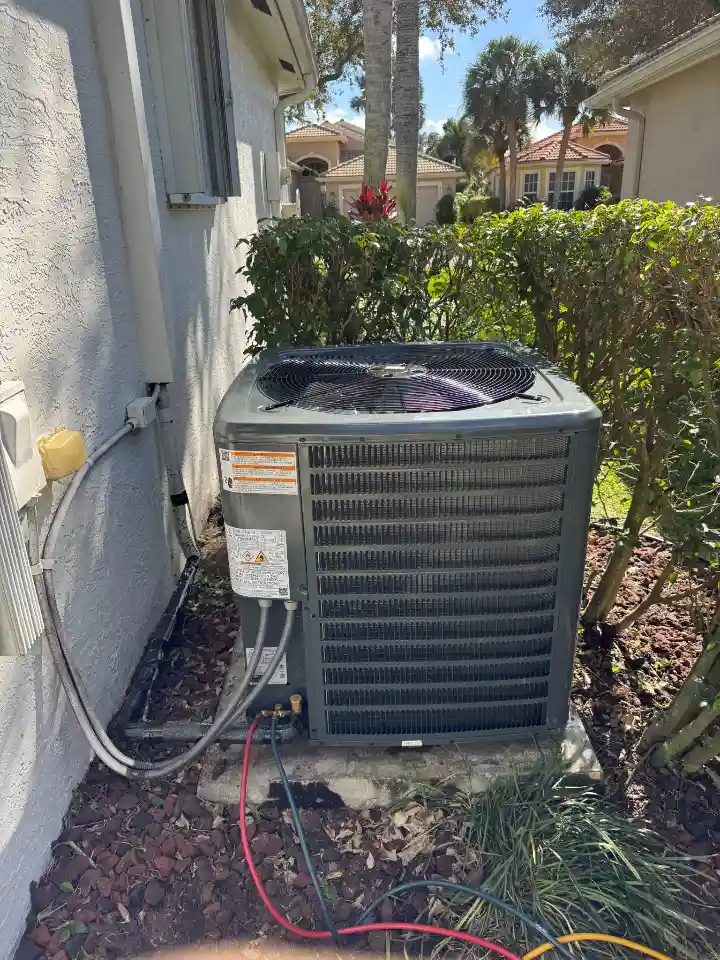
- Make sure the outdoor unit isn’t blocked by plants or debris.
- Check for ice on the copper lines. If you see ice, turn the system off and let it thaw; see why AC units freeze up.
If the system still short cycles after these checks, it needs a diagnosis.
Why you shouldn’t ignore it
The compressor uses the most power and takes the most wear when it starts. Doubling or tripling the number of starts per day shortens its life considerably, and a compressor is the most expensive part to replace. Short cycling also leaves humidity in the house, which in South Florida can lead to musty smells and mold. Our guide to AC humidity problems explains the link.
How a technician fixes short cycling
A proper diagnosis checks airflow, refrigerant pressures, the electrical components, drain and safety switches, thermostat location and, if nothing else explains it, whether the system is sized correctly for the home. Many causes are simple repairs. If the system is badly oversized, the long-term fix is a correctly sized replacement, and we’ll tell you honestly if that’s the case. Learn more on our AC repair page.
Frequently asked questions
How long should an AC run per cycle?
It varies with outdoor temperature and the home, but in Florida summer heat a typical cycle is often 10 to 20 minutes. Cycles of only a few minutes, many times an hour, point to short cycling.
Can a dirty filter cause short cycling?
Yes. It’s one of the most common causes and the easiest to fix.
Is short cycling an emergency?
Usually not an immediate emergency, but it should be fixed soon. If you also smell burning or hear buzzing, turn the system off and call.
AC turning on and off? Call Cold Chillin
We diagnose short cycling across Boynton Beach, Delray Beach, Boca Raton, Lake Worth and the rest of Palm Beach County. Licensed (CAC 1823036), owner-operated and often same-day. Call (561) 318-1882 or book a repair online.