AC Running But Not Cooling? 7 Common Causes and What to Do
Few things are more frustrating than an air conditioner that seems to be working — you can hear it running, you can feel air coming through the vents — but your home just won’t cool down. In Palm Beach County’s summer heat, that situation goes from uncomfortable to unbearable in a matter of hours.
The good news: most of the reasons an AC runs without cooling your home effectively are diagnosable, and many are fixable with a professional service call. Here are the seven most common culprits and what each one means for your system.
1. Dirty or Clogged Air Filter
This is the most common — and most overlooked — reason an AC struggles to cool. When your air filter becomes clogged with dust, pet hair, and debris, airflow through the system is severely restricted. Your AC can’t pull enough warm air across the evaporator coil to cool it properly, and your home suffers for it.
Check your filter first. In Palm Beach County’s year-round operation environment, filters should typically be replaced every 30 to 60 days — more frequently if you have pets or allergy sufferers in the home. If it’s visibly gray or brown, replace it before calling for service.
2. Low Refrigerant / Refrigerant Leak
Refrigerant is the substance that actually absorbs heat from your indoor air and transfers it outside. If your system has a refrigerant leak — which is common in aging systems or those that have suffered physical damage to the copper lines — it can’t absorb enough heat to cool your home effectively.
Signs of low refrigerant include ice forming on the refrigerant lines near the air handler, a hissing sound from the unit, or warm air blowing from your vents despite the system running. This is not a DIY fix — refrigerant handling requires a licensed HVAC technician.
3. Dirty Evaporator or Condenser Coils
Your AC system has two coil sets: the evaporator coil inside your air handler (which absorbs heat) and the condenser coil in your outdoor unit (which releases that heat outside). Both can become coated with dirt, dust, and grime over time — and dirty coils are dramatically less efficient at heat transfer.
In Palm Beach County, outdoor condenser coils are especially vulnerable because of the combination of heat, humidity, and salt air from the coast. Annual coil cleaning is a standard part of our maintenance tune-ups and makes a measurable difference in cooling performance.
4. Frozen Evaporator Coil
Ironically, an AC that isn’t cooling may actually be freezing up internally. A frozen evaporator coil is usually caused by restricted airflow (from a dirty filter or blocked vents) or low refrigerant levels. When the coil temperature drops below freezing, moisture in the air ices over it — and a block of ice can’t transfer heat.
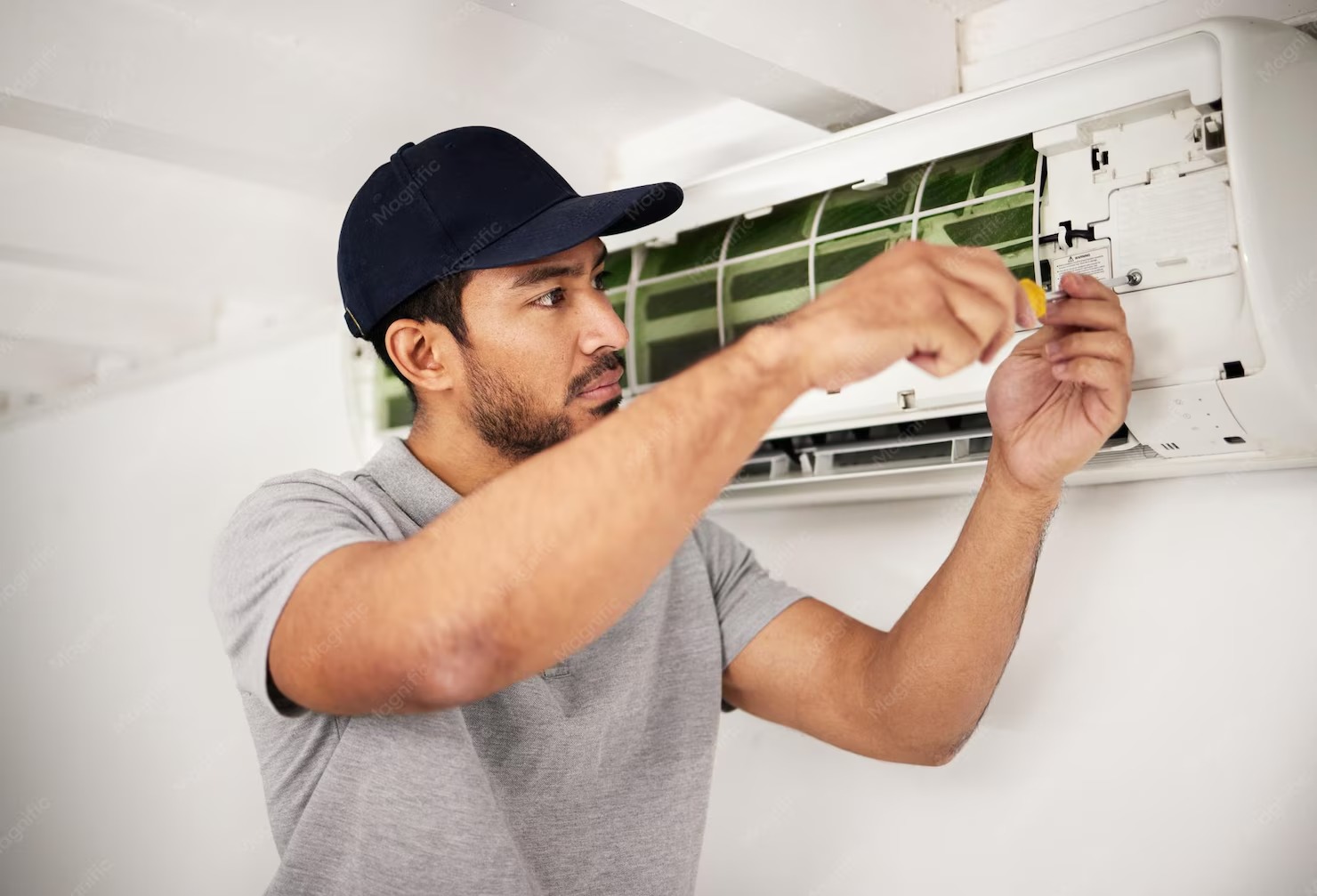
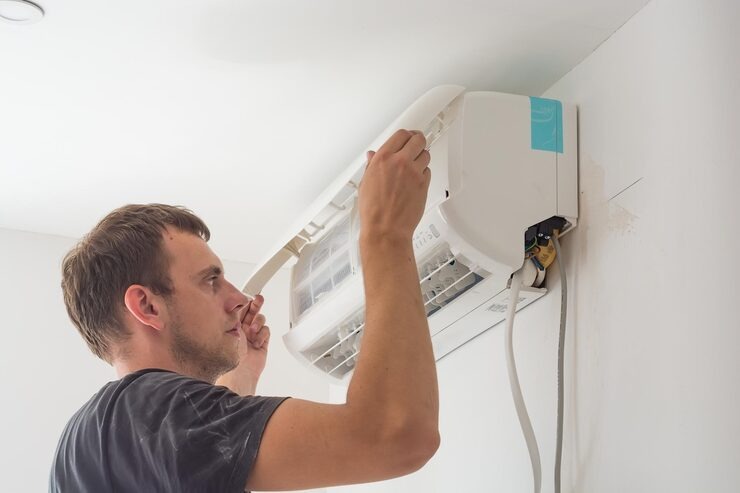
If you suspect a frozen coil, turn your AC to fan-only mode (not cooling) for a few hours to let it thaw, then replace your filter and call a technician. Running the system while frozen can damage the compressor.
5. Thermostat Issues
Before assuming a mechanical problem, check your thermostat. A thermostat that’s poorly positioned (near a heat source or in direct sunlight), miscalibrated, or malfunctioning can cause your AC to cycle incorrectly or not run long enough to reach your set temperature.
Also check that your thermostat is set to “cool” mode and that the set temperature is actually below your current indoor temperature. It sounds obvious, but thermostat settings are often the culprit after a power outage or when someone in the household adjusts settings.
6. Undersized or Aging System
If your system has always struggled during the hottest days of the year, it may simply be undersized for your home — a common issue when homeowners add square footage, enclose a patio, or add large windows without upgrading the AC capacity.
An aging system faces a related problem: even if it was properly sized when installed, years of wear reduce its efficiency and cooling capacity. A 15-year-old system running at 70% of its original capacity simply cannot keep up with a Palm Beach County summer the way it once did.
7. Ductwork Leaks
Your AC can be working perfectly and still fail to cool your home if the cooled air is escaping into your attic through leaky ducts before it ever reaches your living spaces. The Department of Energy estimates that the average home loses 20 to 30% of conditioned air through duct leaks.
Symptoms of significant duct leakage include certain rooms that are always warmer than others, high energy bills despite seemingly normal operation, and excessive dust near your vents. Duct sealing and insulation is one of the highest-ROI improvements a Palm Beach County homeowner can make.
What to Do Right Now
If your AC is running but not cooling effectively, work through this checklist:
- Check and replace the air filter if it’s dirty
- Make sure all supply and return vents are open and unobstructed
- Check your thermostat settings and batteries
- Look for ice on the refrigerant lines near the air handler
- Check that your outdoor condenser unit is running and not blocked by debris
If none of those steps resolve the issue, it’s time to call a professional. Continuing to run a struggling AC can compound the damage and turn a minor repair into a major one.
Cold Chillin Air Conditioning provides same-day AC repair throughout Palm Beach County. Our technicians diagnose the problem fast and give you a clear, honest assessment of what it takes to fix it. We also offer AC maintenance plans that keep these problems from developing in the first place.
Ready to get started? Call Cold Chillin Air Conditioning today at (561) 318-1882 or visit coldchillinairconditioning.com to book your appointment. License CAC 1823036.