You can hear the fan inside and air is coming out of the vents, but it isn’t cold. You walk outside and the condenser is silent: no fan, no hum. This is one of the most common AC problems in South Florida, and the good news is that the cause is often a single failed part rather than the whole system.
Here’s how the system works, the checks you can safely do, and what a technician will look for.
How the two halves work together
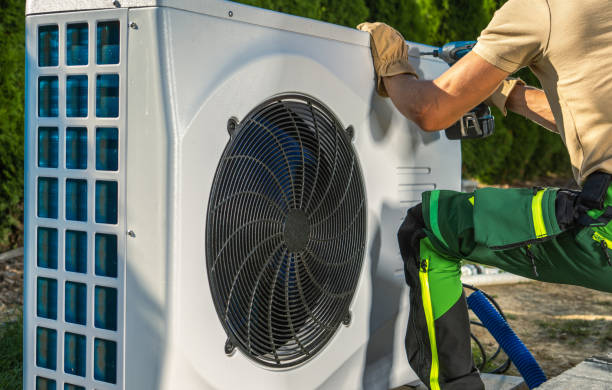
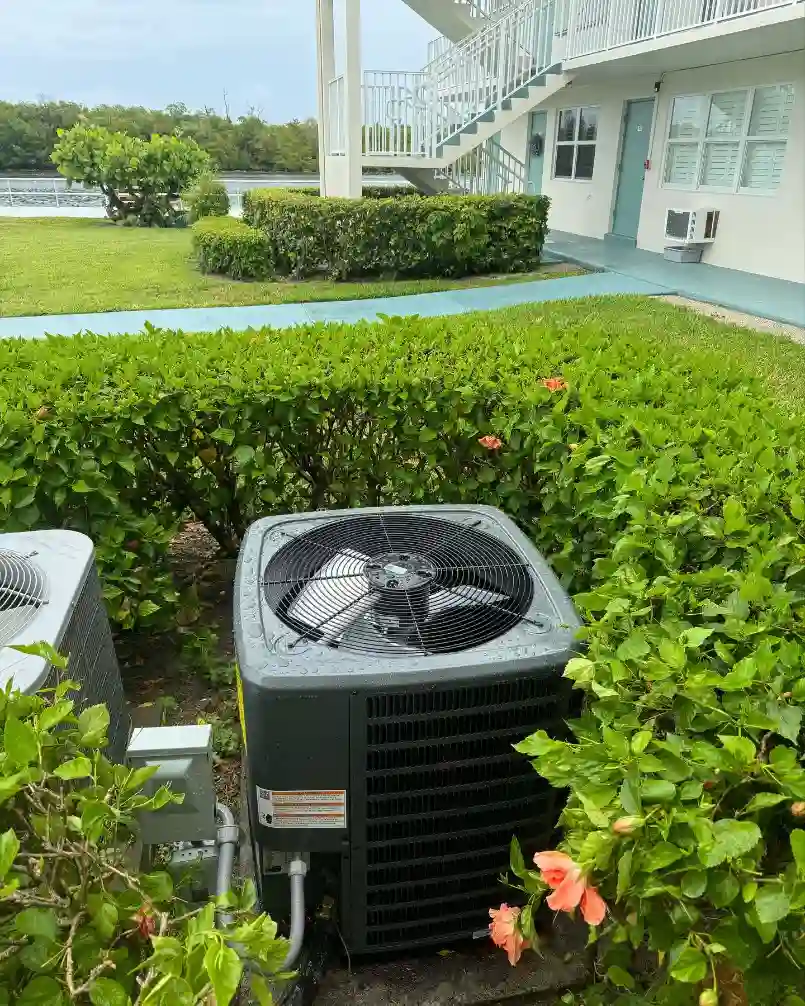
Your central AC has an indoor unit (the air handler, with the blower and evaporator coil) and an outdoor unit (the condenser, with the compressor and a large fan). The thermostat sends a low-voltage signal to both. If the indoor blower runs but the outdoor unit doesn’t, the signal or power isn’t reaching the outdoor unit, or a part inside it has failed.
Checks you can do safely
1. The thermostat
Confirm it’s set to Cool, not Fan or Auto-Fan only, and the set temperature is a few degrees below the room temperature. Replace the batteries if the display is dim.
2. The breaker
The outdoor unit is usually on its own double breaker in the main panel. If it’s tripped, reset it once following the steps in our guide on an AC that keeps tripping the breaker. If it trips again, stop and call.
3. The outdoor disconnect
Next to the condenser there’s a small box on the wall with a pull-out block or a switch. Make sure it’s fully in or switched on. Lawn crews and pressure washers sometimes knock it loose.
4. The float switch
Many Florida systems have a safety switch on the drain line or drain pan that cuts power to the outdoor unit when water backs up. If there’s water in the pan or the switch has tripped, the drain line is likely clogged. Clearing the drain often brings the outdoor unit back. See why AC units leak water.
If all four look fine, the problem is inside the outdoor unit, and that’s where a technician comes in.
Common causes inside the outdoor unit
Failed capacitor
The most common cause in Palm Beach County. The capacitor helps start the compressor and fan motor, and heat wears it out. A failed capacitor often causes a humming or buzzing outdoor unit with the fan not spinning. Don’t try to start the fan by pushing it with a stick; capacitors store a dangerous electrical charge.
Bad contactor
The contactor is a switch that closes when the thermostat calls for cooling. Its contacts can burn or pit, and ants are notorious in Florida for nesting inside and blocking it. A stuck contactor can also keep the outdoor unit running when it should be off.
Fan motor failure
If you hear the compressor humming but the fan isn’t turning, the fan motor may have failed. The compressor will overheat and shut down quickly without it, so turn the system off.
Compressor problems
If the capacitor, contactor and fan are all fine, the compressor may have overheated, tripped its internal overload, or failed. Older compressors sometimes need a hard-start kit. A failed compressor on an older system is the point where replacement may make more sense; our repair vs. replace guide walks through the decision.
Wiring or control problems
The thin thermostat wire running to the outdoor unit can be cut by lawn equipment, chewed, or corroded. Loose high-voltage connections also stop the unit from starting.
Turn the system off while you wait
Running the indoor blower without the outdoor unit doesn’t cool the house, and if the compressor is trying to start without its fan, you risk more damage. Switch the thermostat to Off until the system is checked. Close blinds on the sunny side of the house and use ceiling fans in occupied rooms.
How much does the repair cost?
Capacitors, contactors and float switches are among the less expensive AC repairs. Fan motors cost more, and compressors are the most expensive. Our AC repair cost guide gives typical ranges. We always explain the cause and the price before doing any work.
Frequently asked questions
Why is my AC fan running but no cold air?
Most often because the outdoor unit isn’t running. Check the thermostat, breaker, disconnect and float switch, then call if it still won’t start.
Can I replace an AC capacitor myself?
We don’t recommend it. Capacitors hold a charge even with the power off, and the wrong rating can damage the motors. It’s a quick job for a technician.
Will a tune-up prevent this?
A tune-up tests the capacitor and contactor and catches many of these failures before they happen. See our AC maintenance service.
Outdoor unit won’t start? Call Cold Chillin
We repair AC systems across Boynton Beach and Palm Beach County, from Hypoluxo and Lantana to Royal Palm Beach and Jupiter. Licensed (CAC 1823036), owner-operated and often same-day. Call (561) 318-1882 or book AC repair online.