Introduction: Why Regular AC Maintenance in Palm Beach County Is Non-Negotiable
Lower AC bill Palm Beach County is a top priority for many homeowners facing Florida's year-round heat and humidity. If your energy bills keep increasing, this guide shares 12 proven ways to reduce cooling costs, improve AC efficiency, and keep your home comfortable throughout 2026.

At Cold Chillin Air Conditioning, we've serviced hundreds of AC systems across Palm Beach County. In our experience, the systems that last 15 to 20 years with minimal breakdowns have one thing in common — their owners maintain them consistently. The ones that fail prematurely? Almost always neglected.

This comprehensive guide covers everything Palm Beach County homeowners need to know about AC maintenance — what it involves, how often to do it, what you can handle yourself, and when to call the professionals at Cold Chillin Air Conditioning.
Lower AC bill Palm Beach County is a top priority for many homeowners facing Florida's year-round heat and humidity. If your energy bills keep increasing, this guide shares 12 proven ways to reduce cooling costs, improve AC efficiency, and keep your home comfortable throughout 2026.
At Cold Chillin Air Conditioning, we've serviced hundreds of AC systems across Palm Beach County. In our experience, the systems that last 15 to 20 years with minimal breakdowns have one thing in common — their owners maintain them consistently. The ones that fail prematurely? Almost always neglected.
This comprehensive guide covers everything Palm Beach County homeowners need to know about AC maintenance — what it involves, how often to do it, what you can handle yourself, and when to call the professionals at Cold Chillin Air Conditioning.Section 1: Why AC Systems in Palm Beach County Need More Frequent Maintenance
Florida’s climate is notoriously hard on air conditioning systems. Here’s why Palm Beach County homeowners need to be more diligent about AC maintenance than homeowners in northern states:
Year-Round Operation
In most of the country, AC systems get a break during fall and winter. In Palm Beach County, most systems run 10 to 12 months per year. This dramatically increases wear on every component — compressors, motors, coils, and capacitors all age faster under continuous operation.
Extreme Heat and Humidity
High humidity causes corrosion on electrical components and promotes mold and algae growth inside your system and ductwork. High temperatures force your compressor to work at or near its maximum capacity for extended periods.
Salt Air Exposure
Homes near the coast face additional challenges from salt air, which accelerates corrosion on outdoor condenser units. Regular cleaning and protective coatings are essential for coastal properties in Palm Beach County.
Dust, Pollen, and Debris
South Florida’s lush vegetation means your system is constantly pulling pollen, dust, and organic debris through its air filter and into the evaporator coil. Without regular cleaning, this buildup significantly reduces efficiency.
Section 2: The Complete AC Maintenance Checklist — Monthly Tasks
Here’s what homeowners should check and address every single month:
✅ Check and Replace the Air Filter
This is the single most impactful maintenance task you can perform. In Palm Beach County, air filters typically need replacement every 30 to 45 days, especially during high-pollen seasons or if you have pets.
How to check: Hold the filter up to light. If you can’t see light through it clearly, replace it. Use a MERV-8 or higher-rated filter for best results without restricting airflow.
✅ Inspect the Area Around Your Outdoor Condenser Unit
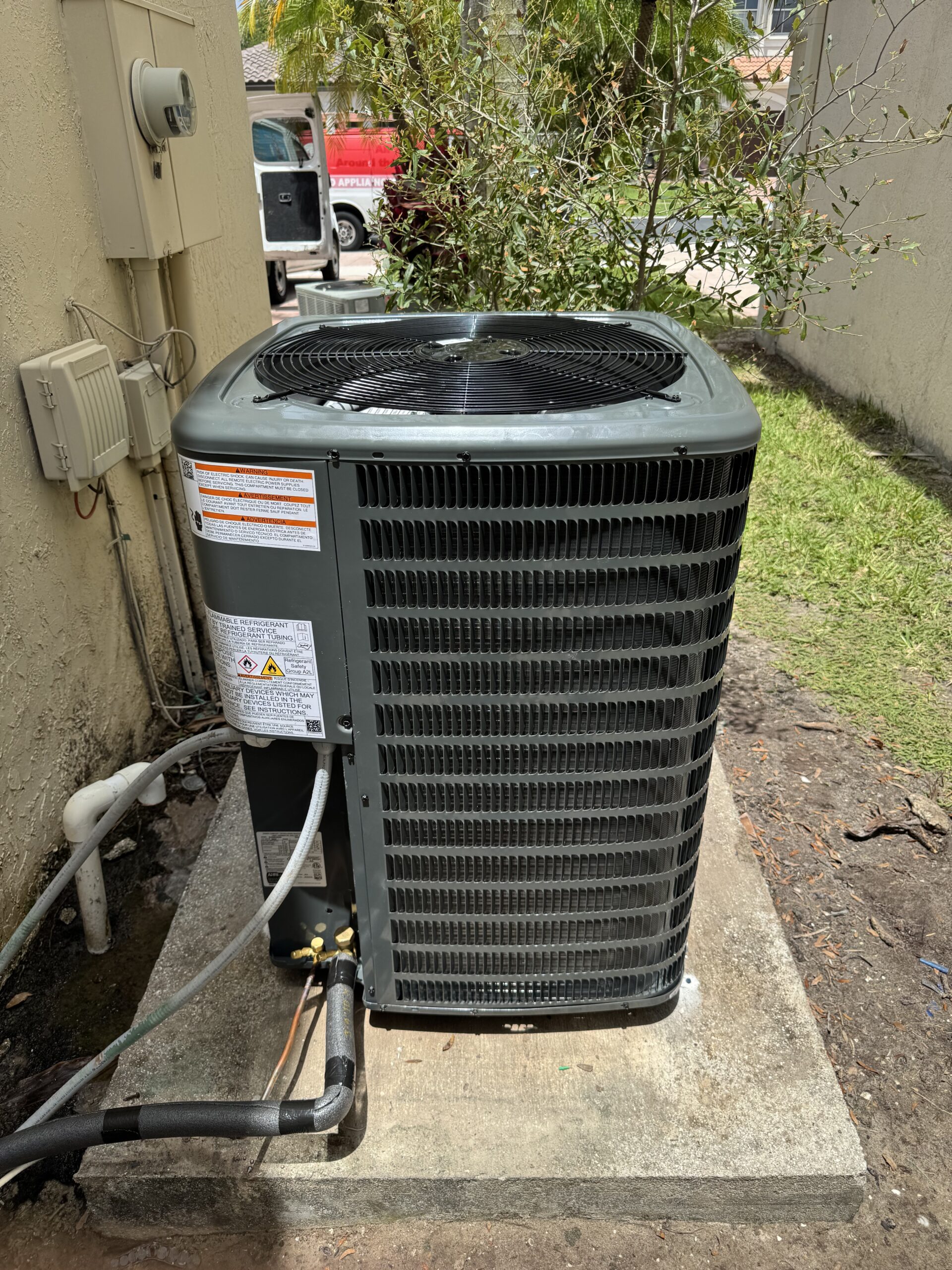
Walk outside and look at your condenser unit. Make sure there’s at least two feet of clear space around all sides. Remove any leaves, grass clippings, or debris that has accumulated on or around the unit.
✅ Listen for Unusual Noises
Stand near your indoor and outdoor units while they’re running. Any new rattling, squealing, grinding, or clicking should be investigated promptly. Early diagnosis of mechanical issues prevents costly failures.
✅ Check Your Thermostat
Verify your thermostat is maintaining the set temperature accurately. Note if certain rooms are consistently hotter or cooler than others, as this may indicate ductwork or zoning issues.
✅ Look for Water Around the Indoor Unit
Check the area around your air handler for moisture, dripping water, or rust stains. This can indicate a clogged condensate drain or a refrigerant issue.
Section 3: The Complete AC Maintenance Checklist — Quarterly Tasks
Every three months, homeowners should address the following:
✅ Clean the Condensate Drain Line
Your AC removes humidity from the air, and that moisture drains away through a condensate line. In Florida’s warm, humid environment, algae and mold grow rapidly inside this line, causing clogs that back up water into your unit and potentially your home.
How to do it: Locate the PVC drain line near your air handler and pour one cup of white distilled vinegar or diluted bleach into the drain port. This kills algae and keeps the line flowing freely. If you notice standing water in the drain pan, the line may already be clogged and should be professionally cleared.
✅ Clean the Outdoor Condenser Fins
Using a garden hose, gently rinse the fins on your outdoor condenser unit from the inside out. Avoid using a pressure washer, as the high pressure can damage the delicate aluminum fins. Clean fins allow better heat exchange and improve efficiency.
✅ Inspect Refrigerant Lines
Look at the insulated refrigerant lines running from your outdoor unit to the indoor unit. The insulation should be intact with no cracks, splits, or missing sections. Damaged insulation causes energy loss and can allow moisture intrusion.
✅ Test Your Thermostat Batteries
If your thermostat uses batteries, replace them every six months to prevent unexpected shutdowns.
Section 4: Professional AC Maintenance — What Our Technicians Check
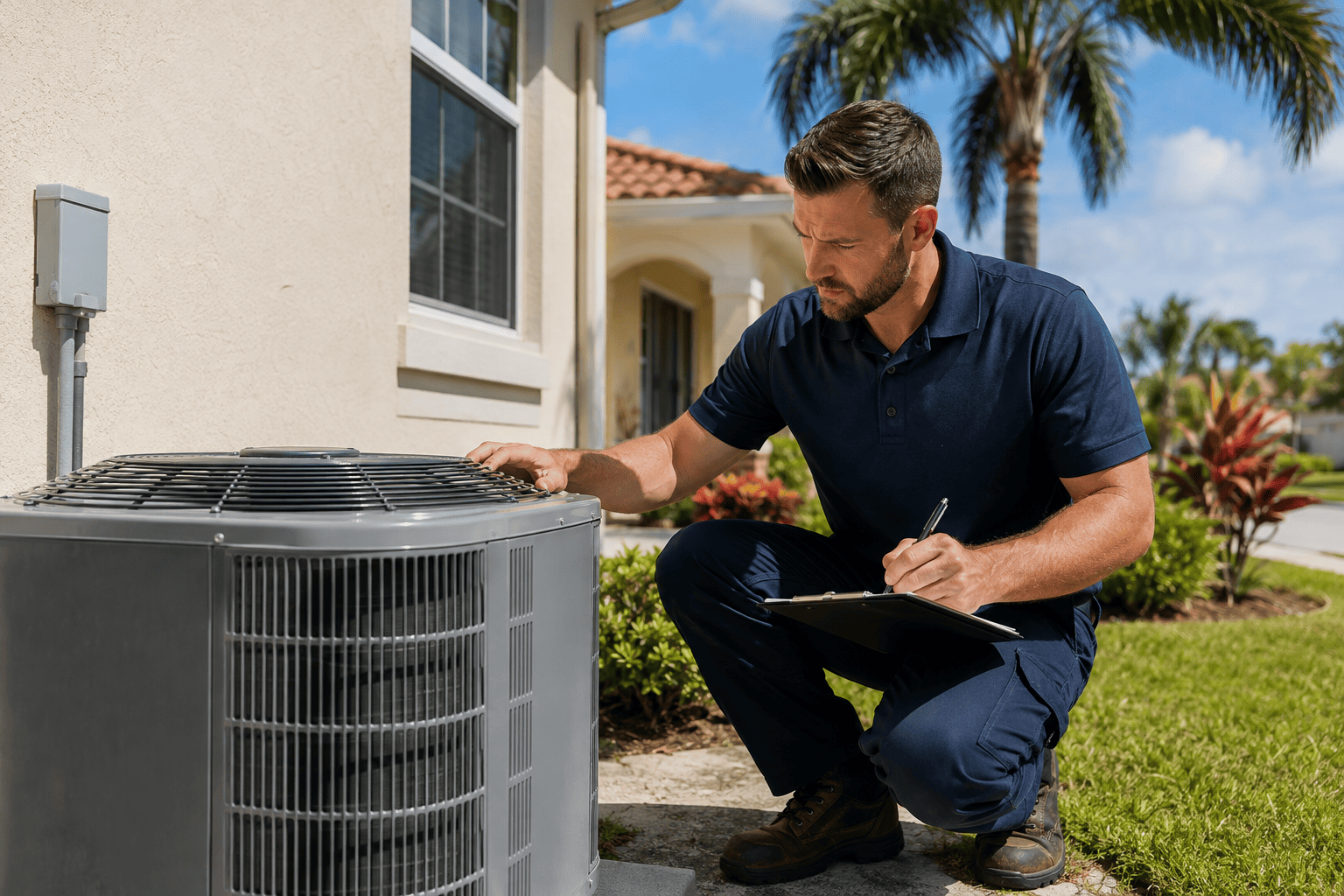
Twice a year — ideally in early spring before summer’s peak heat and again in early fall — schedule a professional AC maintenance visit with Cold Chillin Air Conditioning. Here’s what our licensed technicians inspect and service during a comprehensive tune-up:
Electrical System Inspection
We test all electrical connections, measure voltage and amperage on motors, and inspect contactors, capacitors, and relay switches. Loose connections and failing electrical components are the leading cause of unexpected AC failures.
Refrigerant Level Check
Low refrigerant reduces cooling capacity and forces your system to run longer to achieve the same temperature. We measure refrigerant pressure and check for leaks using electronic leak detection equipment.
Evaporator Coil Cleaning
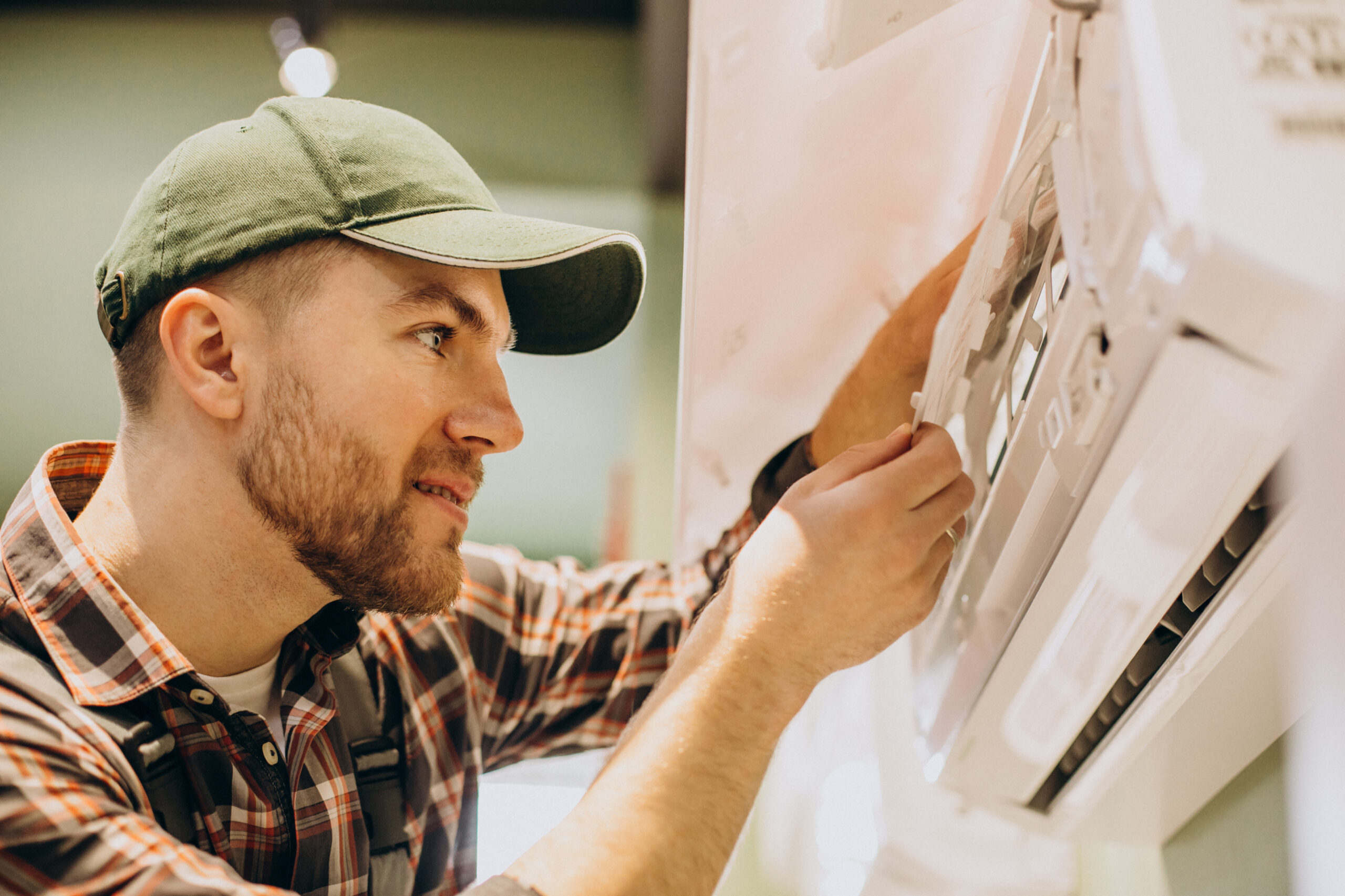
The evaporator coil inside your air handler collects dirt, dust, and biological growth over time. A dirty coil dramatically reduces heat exchange efficiency and can cause the coil to ice over. We clean evaporator coils using professional coil cleaners that restore performance.
Condenser Coil Cleaning
The outdoor condenser coil is exposed to the elements and accumulates dirt, pollen, and debris. We professionally clean condenser coils to restore full heat rejection capacity.
Blower Wheel and Motor Inspection
We inspect the blower wheel for debris buildup and check motor operation, lubrication, and amperage. A dirty or failing blower reduces airflow throughout your home.
Condensate System Service
We inspect the condensate drain pan, float switch, and drain line. We clean the drain line to prevent clogs and verify the float switch operates correctly to prevent water overflow.
Thermostat Calibration
We verify thermostat accuracy and calibrate it as needed. We also check communication between the thermostat and the system to ensure proper operation.
Ductwork Visual Inspection
Where accessible, we visually inspect ductwork for disconnected sections, air leaks, and insulation damage. Leaking ducts can account for up to 30% of cooling loss in Florida homes.
Belt and Pulley Inspection (older systems)
On older systems with belt-driven blowers, we inspect belts for wear and check pulley alignment.
Safety Control Testing
We test all safety controls including high-pressure switches, low-pressure switches, and temperature limit switches to ensure they operate as designed.
Section 5: Seasonal AC Maintenance Calendar for Palm Beach County
Here’s a month-by-month guide to keeping your AC system in peak condition throughout the year in Palm Beach County:
January–February (Mild Season)
Change air filters. Schedule your spring professional tune-up now, before the spring rush fills technician schedules. Check thermostat settings.
March–April (Transition to Hot Season)
Have your professional spring maintenance performed. Clean condensate drain line. Inspect outdoor unit. Check and replace thermostat batteries.
May–June (Peak Heat Begins)
Change air filter. Monitor system performance closely as temperatures rise. Keep vents open and unobstructed throughout your home.
July–August (Peak of Summer)
Change air filter. Check for any signs of reduced cooling or unusual operation. Keep outdoor unit free of debris. Ensure condenser has clear airflow on all sides.
September–October (Late Summer and Early Fall)
Schedule your fall professional maintenance visit. Change air filter. Clean condensate drain line with vinegar treatment.
November–December (Cooler Season)
Change air filter. Test heating operation if your system includes a heat pump. Check insulation on refrigerant lines.
Section 6: The True Cost of Skipping AC Maintenance in Florida
Many homeowners skip professional AC maintenance to save money in the short term. Here’s what that decision actually costs:
Higher Energy Bills
A poorly maintained AC system can consume 20% to 30% more electricity than a properly tuned system. In South Florida, where AC accounts for up to 50% of your electric bill, that adds up fast. A $200 electric bill becomes $260 or higher — month after month, year after year.
More Frequent Breakdowns
Systems that aren’t maintained break down more often and at the worst possible times — during the hottest days of the year. Emergency repair calls cost significantly more than scheduled service visits.
Shortened System Life
If you’re trying to lower AC bill Palm Beach County, upgrading to a high-efficiency SEER2 system may provide long-term savings.
The average well-maintained AC system in Florida lasts 12 to 15 years. Poorly maintained systems often fail at 7 to 10 years, requiring expensive premature replacement. The cost of replacing an entire AC system ranges from $4,000 to $8,000 or more.
Indoor Air Quality Problems
Dirty coils, clogged filters, and neglected drain lines create environments where mold, bacteria, and allergens thrive inside your ductwork and air handler. This directly impacts the health of everyone in your home, particularly those with allergies, asthma, or respiratory conditions.
Voided Manufacturer Warranty
Most AC manufacturers require documented proof of regular maintenance to honor warranty claims. If your system fails within the warranty period but you can’t demonstrate proper maintenance, the manufacturer may deny your claim.
Section 7: Signs That Maintenance Alone Isn’t Enough — When to Consider Replacement
Regular maintenance extends system life, but every AC unit eventually reaches the end of its useful life. Here are the signs that it may be time to replace rather than continue repairing your system:
Your system is more than 12 years old. Repair costs exceed 50% of the cost of a new system. The system uses R-22 refrigerant (phased out in 2020 and now extremely expensive to recharge). Your energy bills continue rising despite good maintenance. You’re experiencing frequent breakdowns — more than one or two per year. The system can no longer maintain comfortable temperatures even on moderate weather days.
At Cold Chillin Air Conditioning, we’ll always give you an honest assessment of whether repair or replacement makes more financial sense for your specific situation. We never recommend unnecessary system replacements.
Conclusion: Invest in Maintenance, Save on Repairs
The math is simple: a professional AC maintenance visit from Cold Chillin Air Conditioning costs a fraction of what a single major breakdown repair costs. More importantly, a well-maintained system keeps your home comfortable, your energy bills low, and your family breathing clean, healthy air — year-round.
Don’t wait until the hottest day of the year to find out your AC system isn’t up to the challenge. Call Cold Chillin Air Conditioning at (561) 318-1882 today to schedule your comprehensive AC maintenance visit. We serve all of Palm Beach County, including West Palm Beach, Boynton Beach, Boca Raton, Delray Beach, Lake Worth, Wellington, and Jupiter.
Your comfort is our priority — and we’re here to keep it that way, 24 hours a day, 7 days a week.