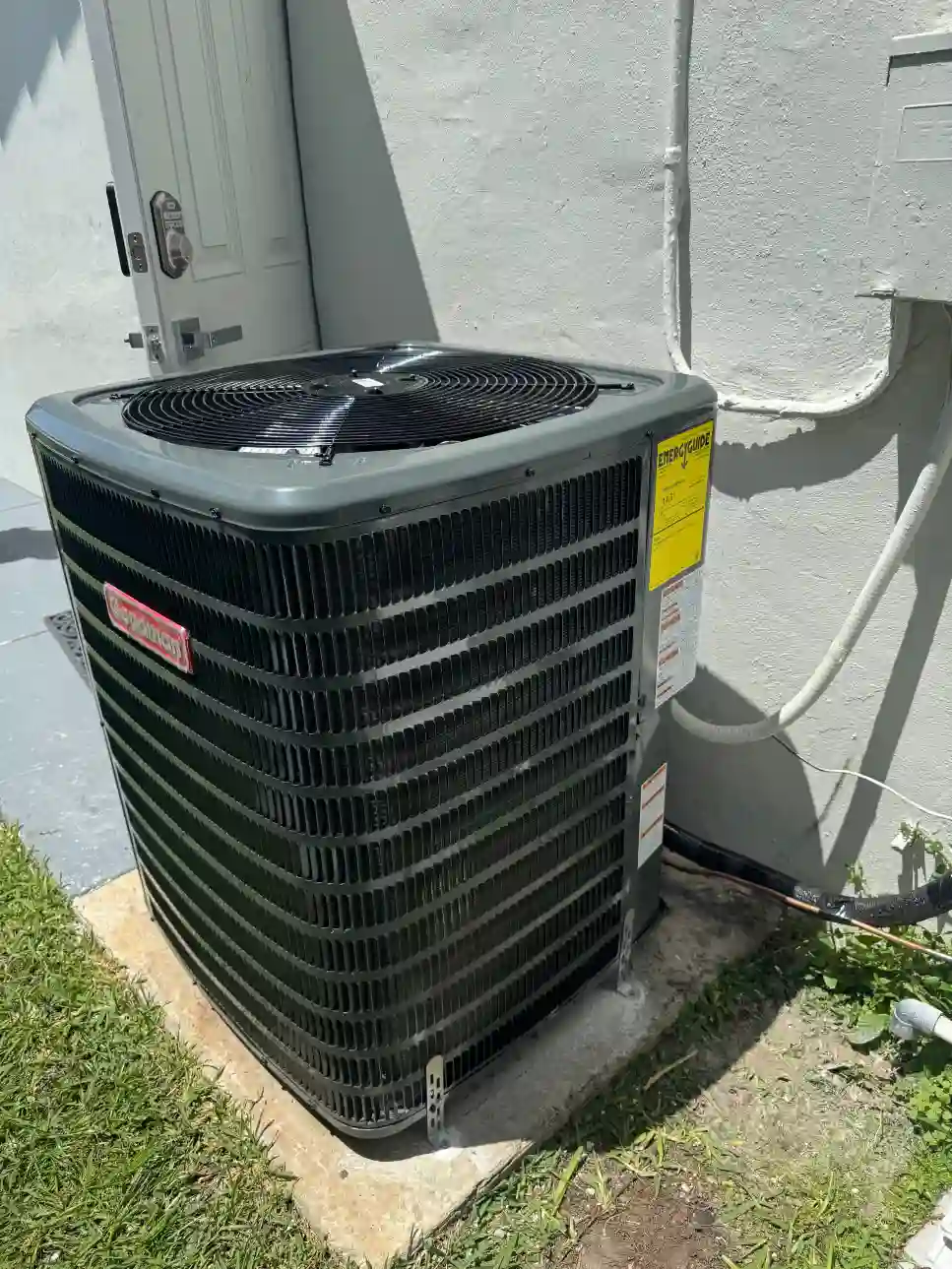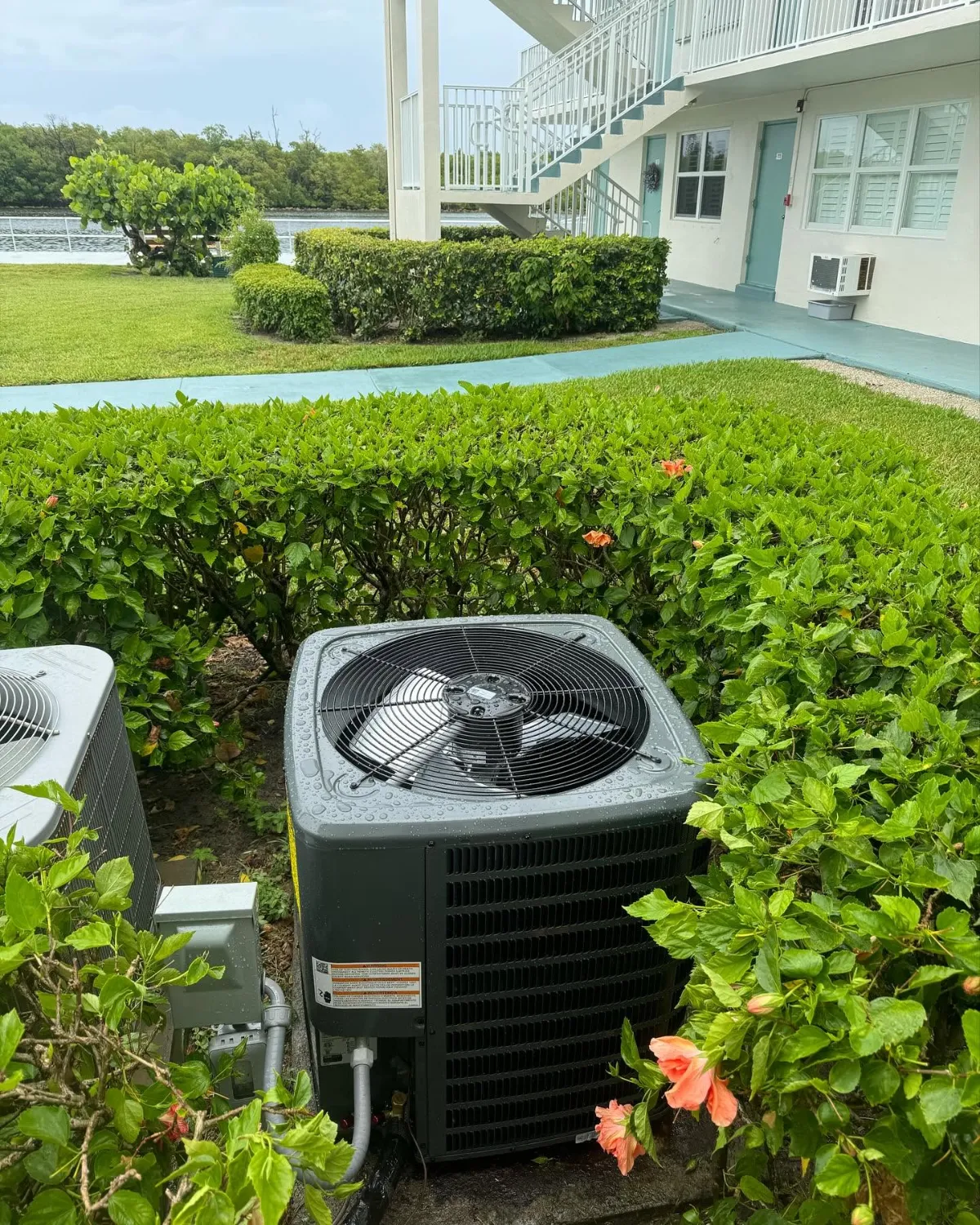

Your air conditioner normally makes two sounds: a steady hum from the outdoor unit and a soft whoosh of air from the vents. Anything else is the system telling you something. Some noises are harmless. Others mean a part is about to fail and you should turn the system off now to avoid a much bigger repair. Here’s how to tell the difference.
Quick guide: AC noises and what they mean
| Noise | Likely cause | How urgent? |
|---|---|---|
| Buzzing or humming, unit won’t start | Failed capacitor or contactor | Turn off and call soon |
| Rapid clicking at the outdoor unit | Contactor or electrical fault | Call soon |
| Single click when starting/stopping | Normal relay or thermostat | Normal |
| Banging or clanking | Loose or broken part, fan blade, compressor | Turn off now |
| Squealing or screeching | Fan motor bearings, blower | Call soon |
| Hissing or bubbling | Refrigerant leak or high pressure | Call soon |
| Screaming / very loud whine | Dangerously high compressor pressure | Turn off now |
| Rattling | Loose panel, debris, or loose screws | Check, then call if it continues |
| Gurgling indoors | Condensate drain partially clogged | Fix before it leaks |
Buzzing
A loud buzz from the outdoor unit while the fan isn’t spinning is the classic sign of a failed run capacitor. The motor is getting power but can’t start. Left running, the compressor can overheat and damage itself. This is the single most common summer repair in South Florida because heat wears capacitors out fast. Turn the system off at the thermostat and call. Don’t poke the fan with a stick to “start it”; that’s a good way to get hurt.
A softer buzz can also come from a loose electrical connection or a contactor with pitted contacts. Both are routine fixes when caught early.
Clicking
One click when the system turns on or off is normal; that’s the relay or contactor engaging. Repeated rapid clicking without the unit starting points to an electrical problem: a failing contactor, a bad thermostat, or a control board issue. Clicking from inside near the vents can also be a loose part hitting the blower.
Banging or clanking
A bang usually means something is loose or broken: a fan blade hitting the housing, a loose blower wheel, or a problem inside the compressor. Turn the system off right away. Running it can turn a fan-blade repair into a compressor replacement.
Squealing or screeching
A high-pitched squeal from the outdoor unit or air handler usually means the fan motor bearings are worn. Motors often squeal for a while before they seize, so this is a good time to replace the motor on your schedule instead of on a 95-degree afternoon. On some systems a squeal on startup can also be normal for a few seconds; constant squealing is not.
Hissing or bubbling
Hissing near the refrigerant lines or the indoor coil can mean a refrigerant leak. Other signs include ice on the copper lines, weak cooling and a system that runs constantly. Low refrigerant always means a leak; topping it off without fixing the leak just postpones the problem. See why AC units freeze up for related symptoms.
Screaming
A loud, rising, almost screaming sound from the outdoor unit can be a sign of dangerously high pressure inside the compressor. Turn the system off immediately and call a technician.
Rattling
Rattles are often the easy ones: a loose access panel, twigs or leaves inside the condenser, or loose screws. With the power off, check that the outdoor unit’s panels are tight and the top grille is clear. If the rattle is coming from the compressor itself, call for service.
Gurgling or dripping inside
Gurgling near the air handler usually means the condensate drain is partly clogged and water is backing up. In Florida’s humidity, that’s how ceilings get stained. Flush the drain line or call before it overflows. Our AC leaking water guide explains what to do.
When to turn the AC off
- Banging, clanking or grinding
- Screaming or very loud whining
- Buzzing with the fan not spinning
- Burning or electrical smell along with any noise
For everything else, it’s usually safe to keep running the system until a technician can look, but don’t wait weeks. Noises rarely fix themselves.
How to prevent noisy breakdowns
Most noisy failures (capacitors, contactors, motor bearings) show warning signs during a routine inspection. A twice-a-year tune-up catches them before they leave you without cooling. We cover what a tune-up should include in our AC tune-up cost guide.
Frequently asked questions
Is it normal for my AC to be loud?
A steady hum and the sound of the fan are normal. A noticeable change in sound, or a new noise, is not and is worth checking.
Why does my AC make noise when it turns off?
A click or brief whoosh as pressures equalize is normal. A loud bang on shutdown can mean a loose part or compressor issue.
How much does it cost to fix a noisy AC?
It depends entirely on the cause. A capacitor or contactor is a relatively small repair; a compressor is a major one. Catching the noise early is what keeps it small. See our AC repair cost guide.
Strange AC noise? Call Cold Chillin
We diagnose noisy AC systems across Palm Beach County, from Boynton Beach to Delray Beach, Lake Worth and Palm Beach Gardens. Licensed (CAC 1823036), owner-operated and often same-day. Call (561) 318-1882 or book AC repair online. More on our AC repair service.